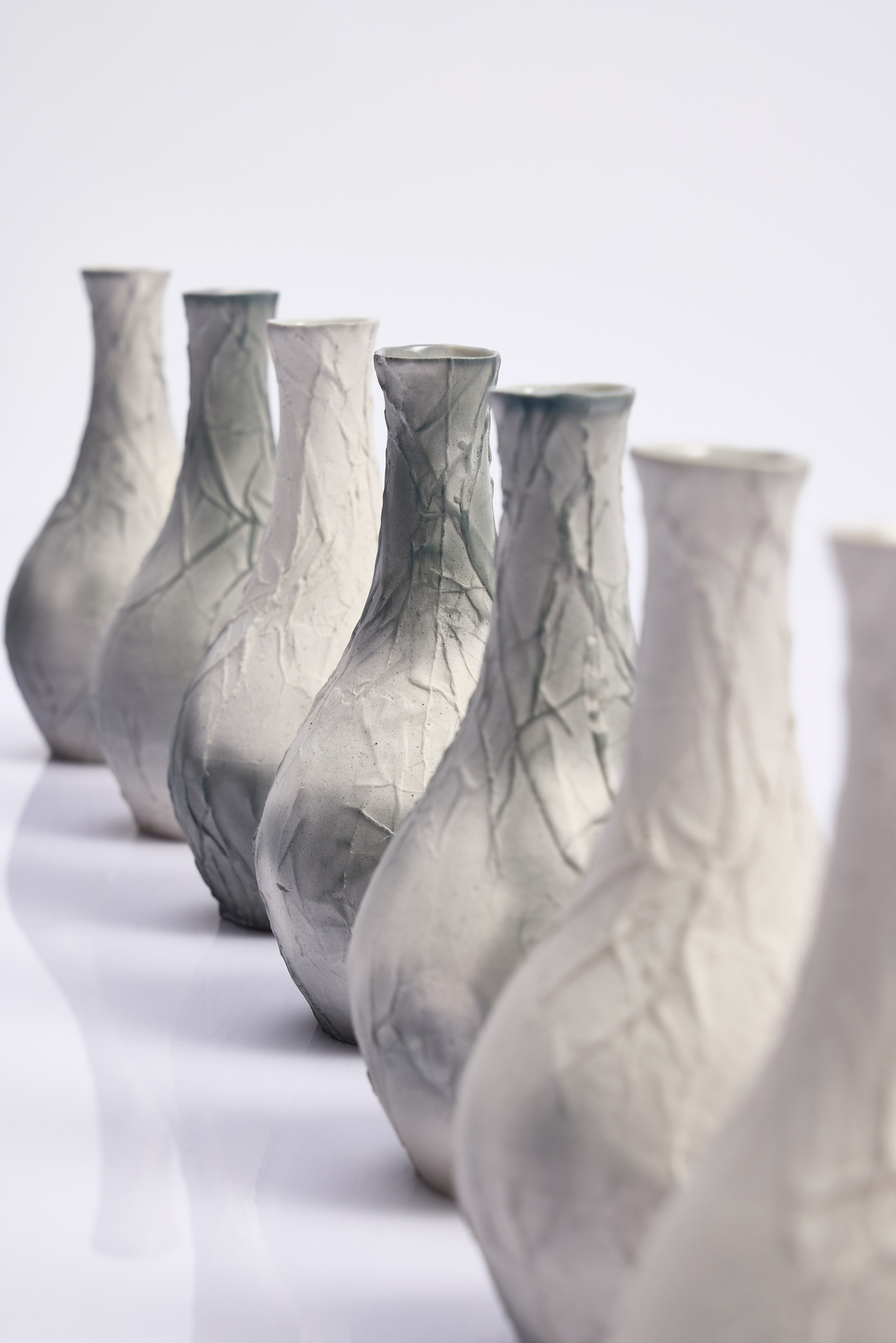
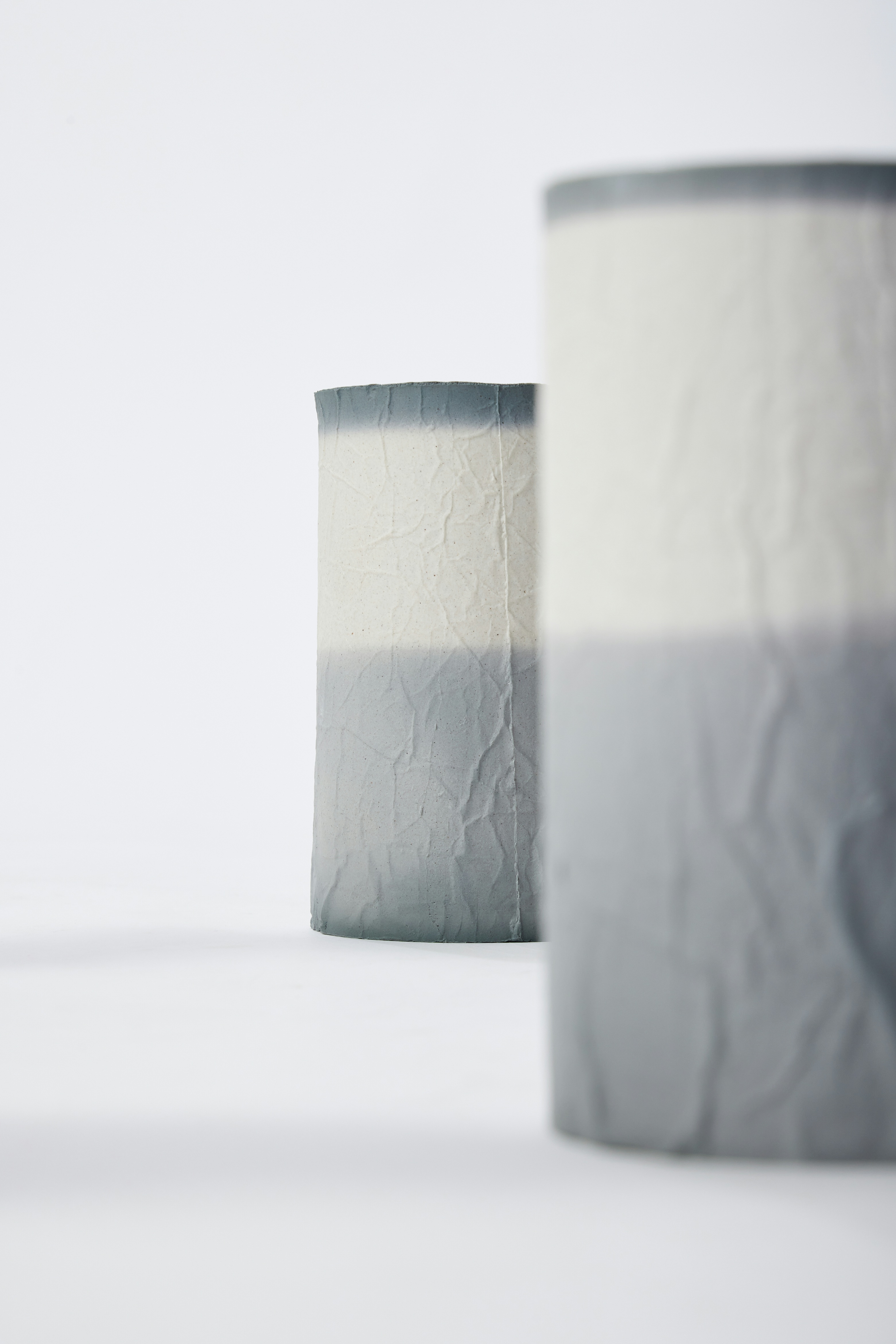
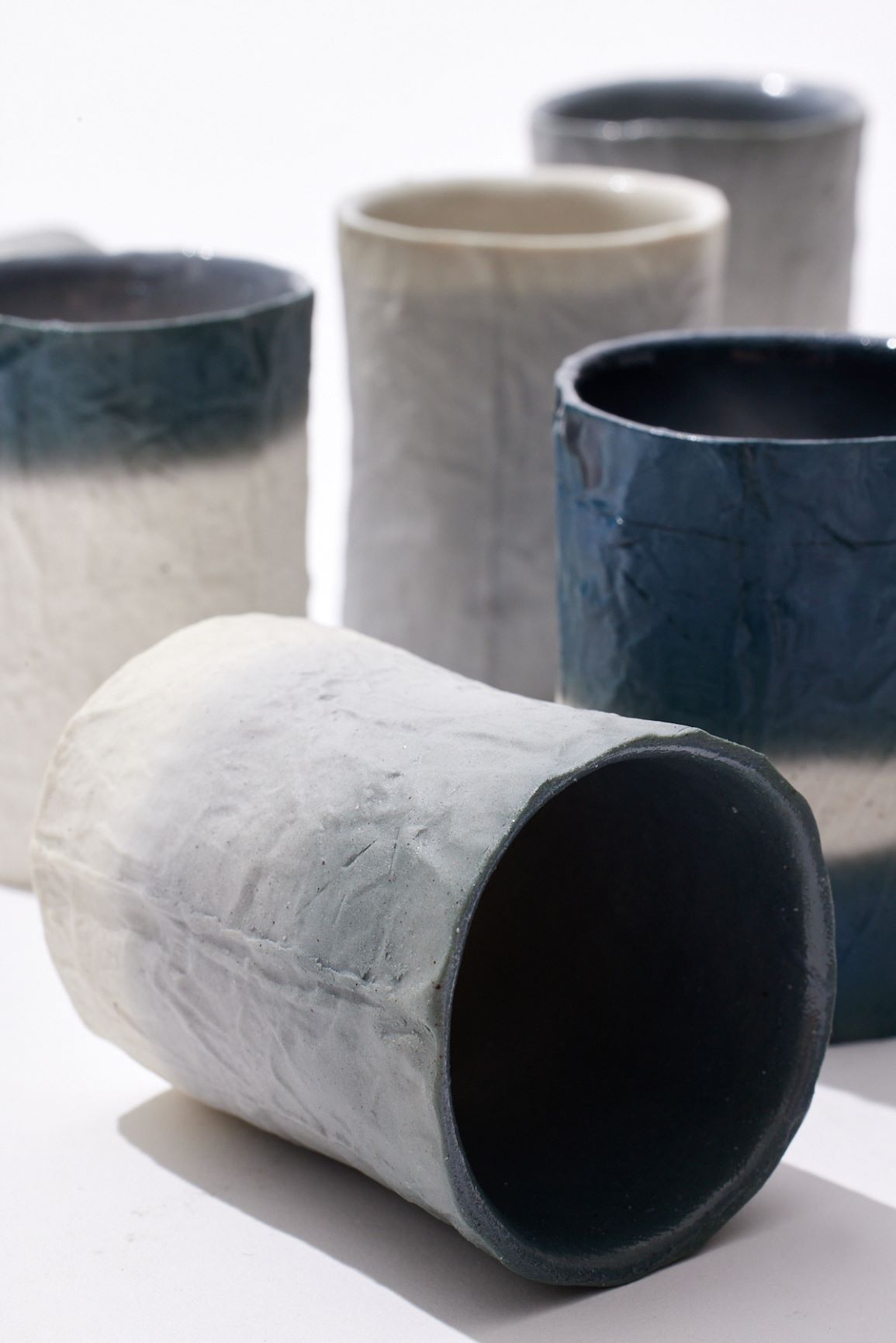
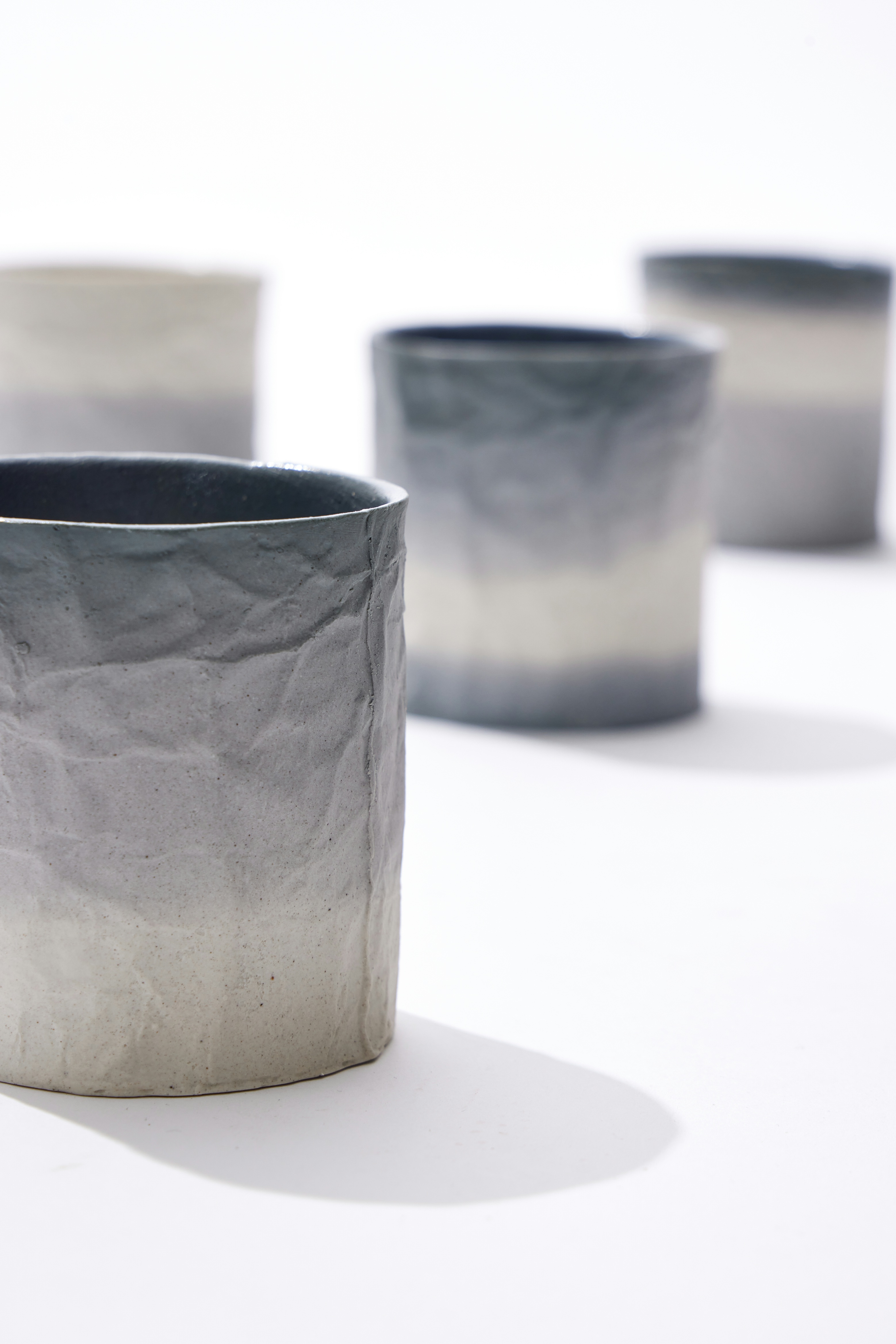
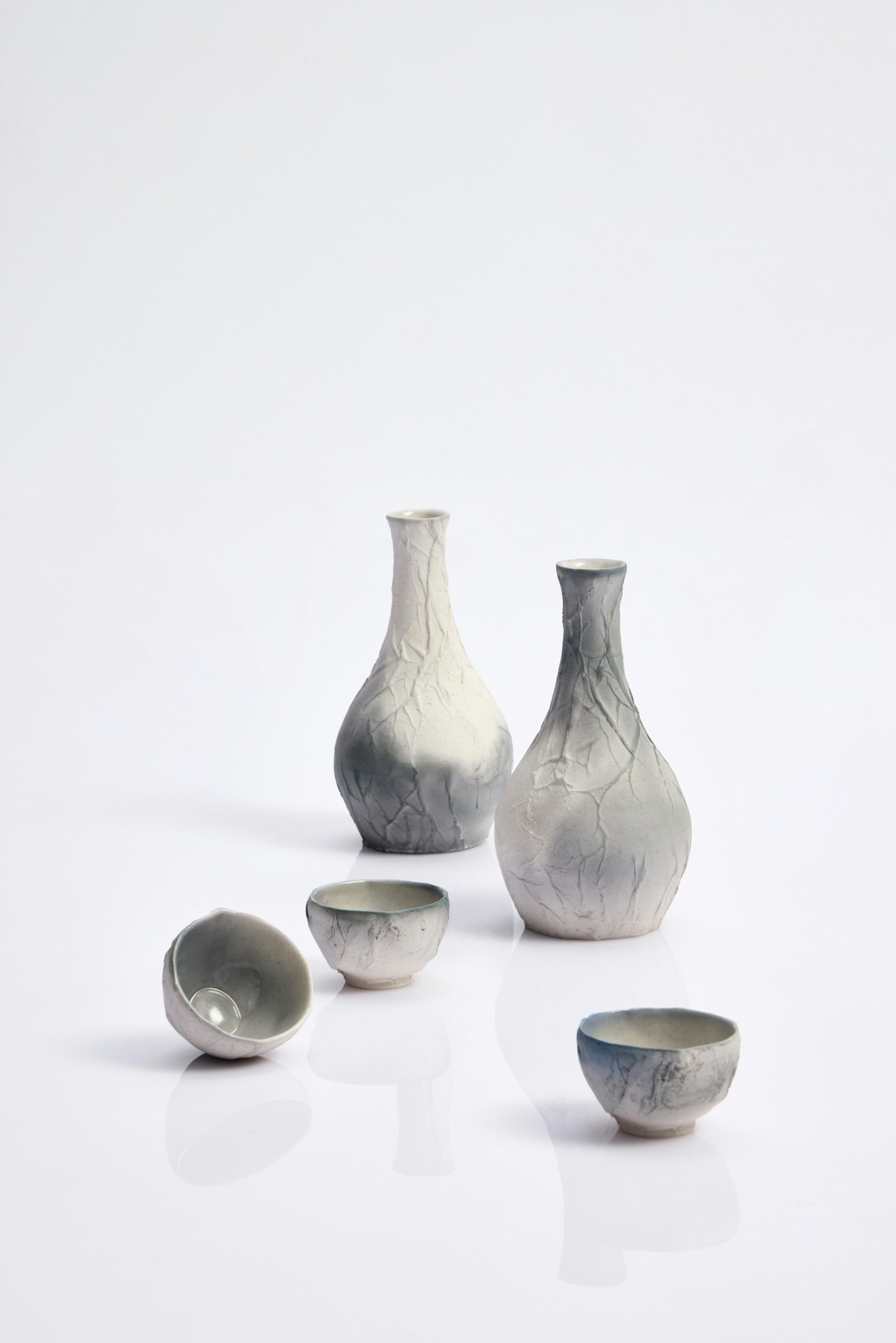
Hanji, traditional Korean paper, has the characteristic of smudging due to its unique texture made by stacking thin threads of paper mulberry, the raw material.
The absorptivity of Hanji, caused by a capillary phenomenon due to its porosity, is visualized by pigments. As the absorptivity by the capillary phenomenon can also occur in soil, the purpose of a bisque firing in the pottery-making process is to improve porosity and absorptivity. Therefore, the absorptivity and solidity of pottery after bisque firing enable the pottery to maintain its shape and preserve the pattern made by smudged water-soluble pigments even when in contact with the liquid.
The purpose of this work is to create crafts by visualizing the smudging based on absorptivity, the common property of Hanji and bisque, in order to stimulate the human senses based on illusion coming from the commonality of absorptivity and the difference between Hanji and pottery and to give the individuality of objects through the difference in patterns derived from the smudging.
42th Korea New Art Exhibition-Pottery Part Special Exhibition (2024)
40th Korea New Art Exhibition-Pottery Part Special Exhibition (2022)
8th Korea Royal Craft Exhibition-Pottery Part Entry (2019)
Individual Exhibition
2025 紙 紋(JI MUN)series <paper pattern> Incheon Gallery
2022 Sah-si-jang-cheong(四時長靑) Suwon Nosong Gallery
2019 Layering Tradition Suwon Cultural Foundation Sweet Gallery
Group Exhibition
2024 Art Exhibition [Pots with Choi] Gyeongin Art Museum
2022 Korea-Japan Handicraft Exchange Exhibition
Japan Asahikawa Civic Gallery and others
Art Fair
2024 Craft Trend Fair – Emerging Craft Artists Pavilion - COEX HALL C
2025 Bank Art Fair - SETEC HALL 2
2025 The 16th PAN PACIFIC SINGAPORE HOTEL ART FAIR
2025 Gyeonggi Ceramic Fair - COEX HALL D
Ceramics & Pottery
Craft
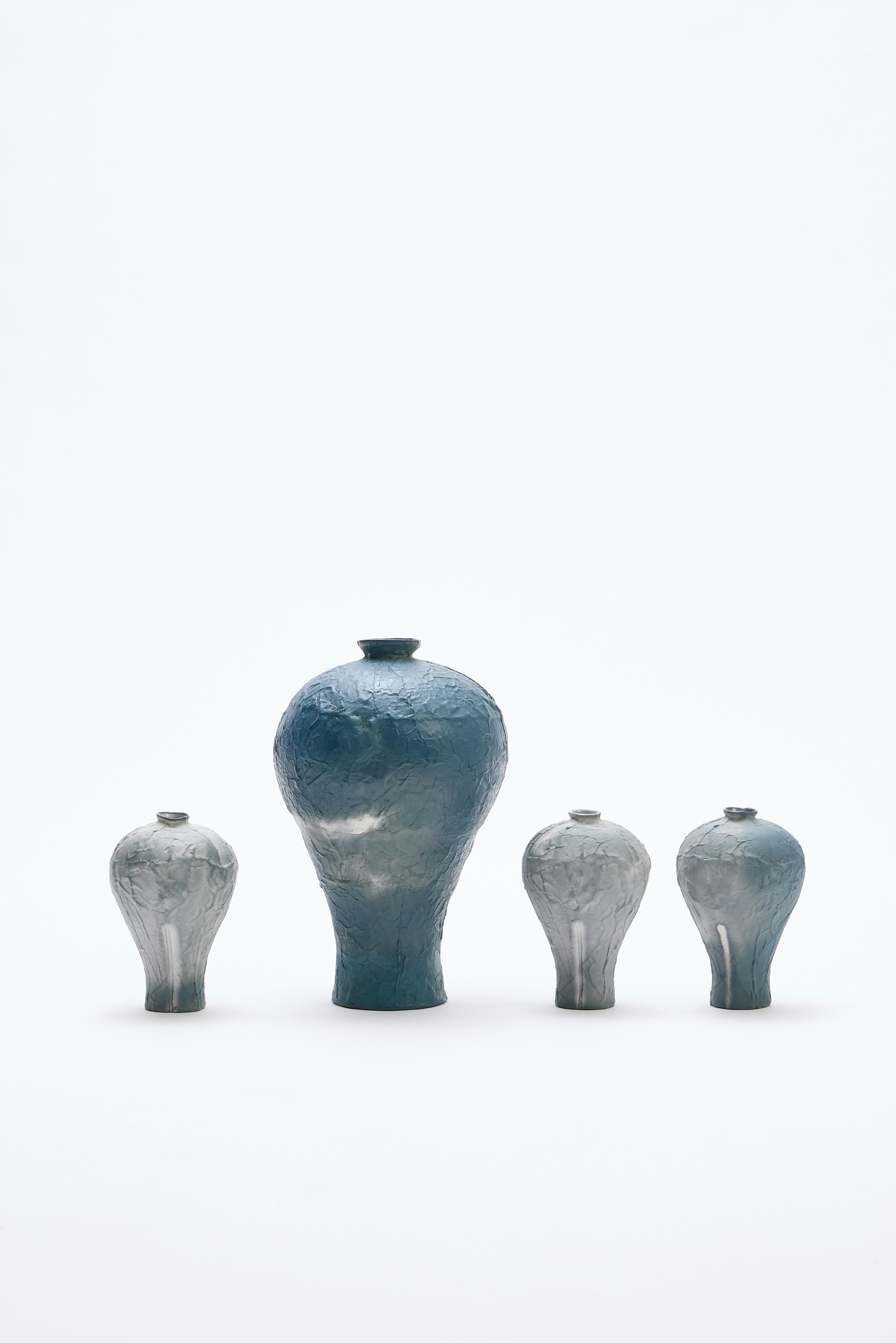
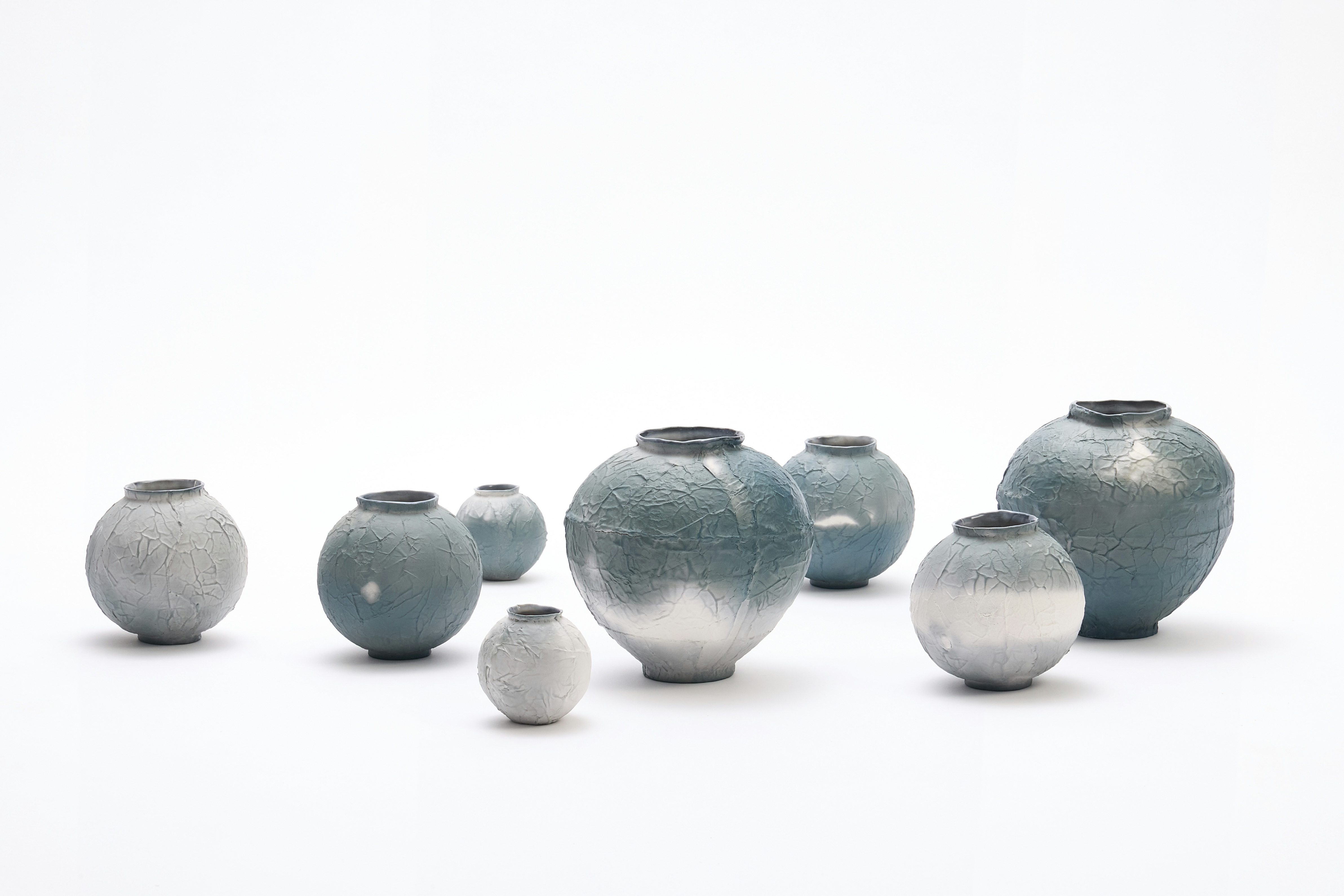
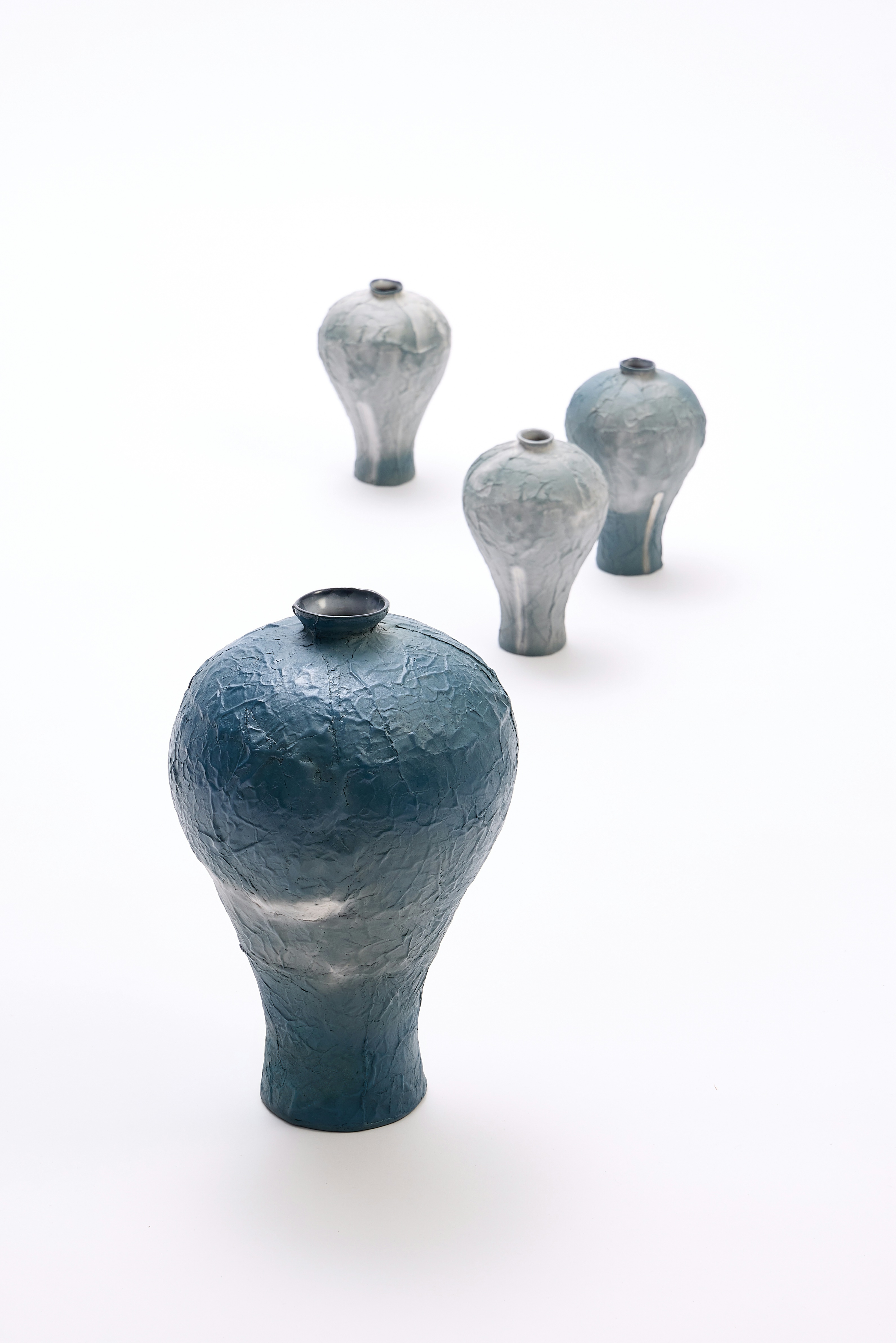
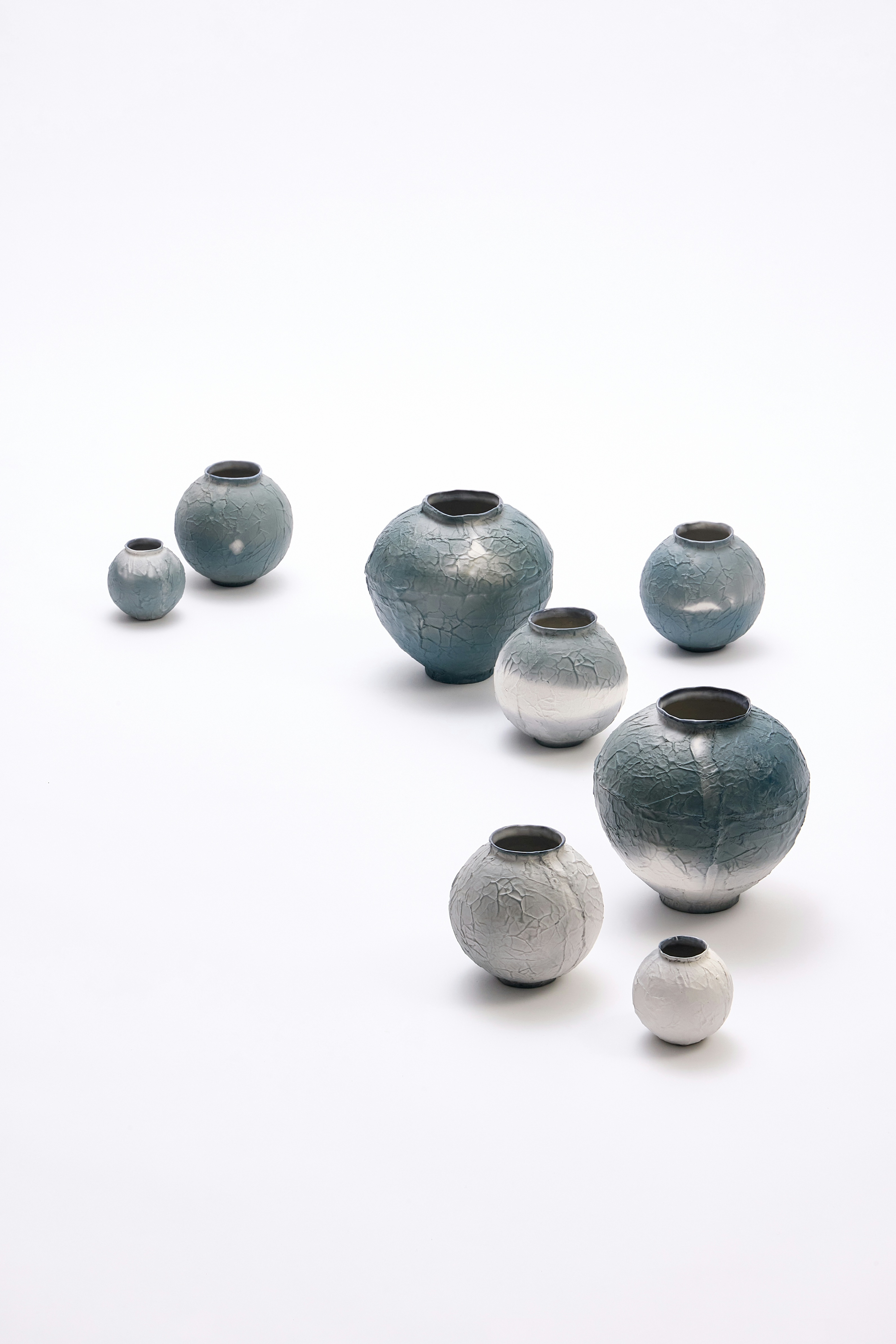
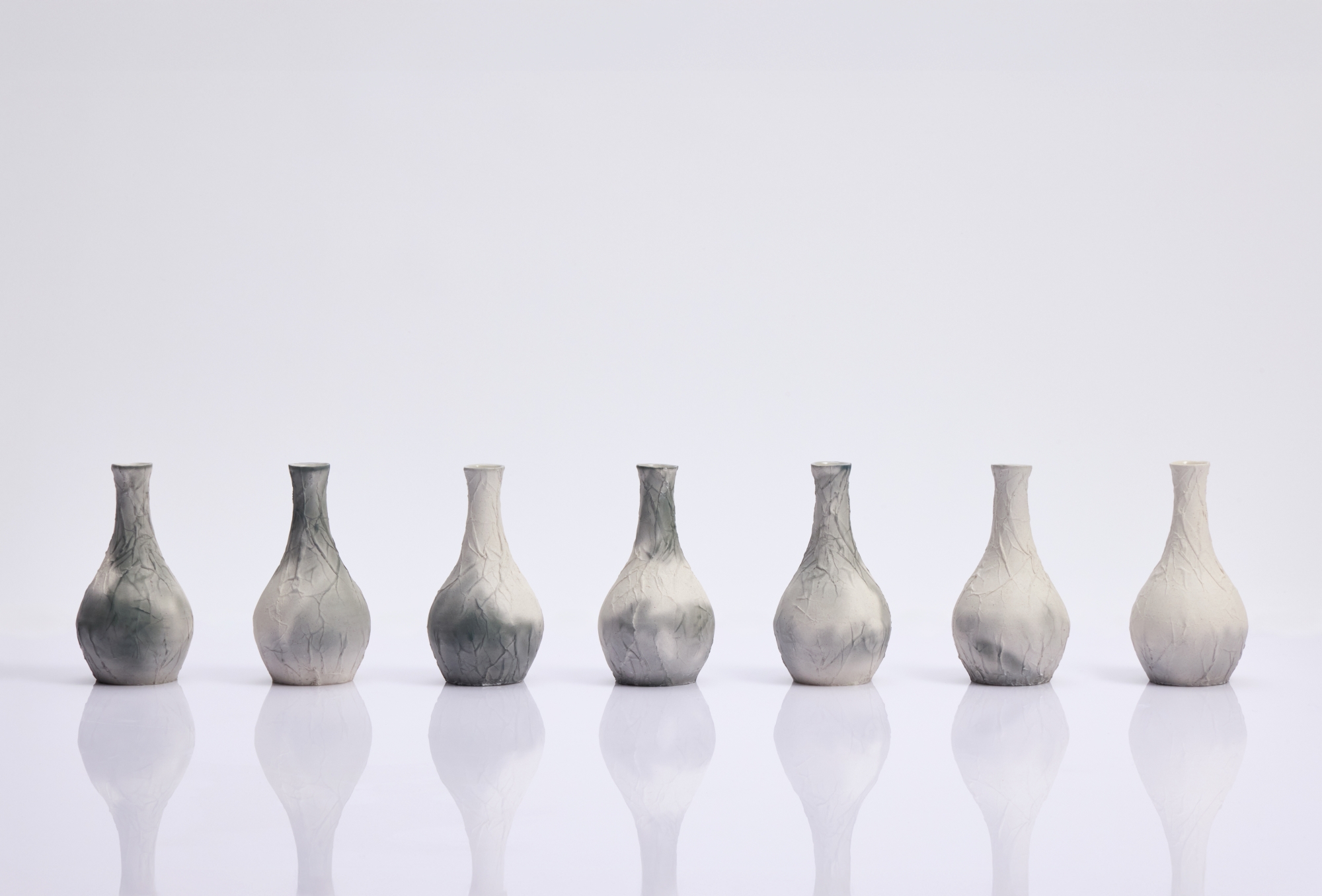
A work capturing the individuality of objects through the natural bleeding created by the absorbent qualities of hanji and bisque-fired porcelain.
Through the meeting of hanji and porcelain, a subtle rhythm of absorption and dissolution emerges.
This can be interpreted as a visual dialogue that embodies Korean minimalism and the calm aesthetics of Zen.
The work reveals a process in which intention and coincidence coexist, leaving traces of serenity within the material’s quiet transformation.
Production Year: 2025
Production Technique: Porcelain+SandyClay, Slip casting
Through the meeting of hanji and porcelain, a subtle rhythm of absorption and dissolution emerges.
This can be interpreted as a visual dialogue that embodies Korean minimalism and the calm aesthetics of Zen.
The work reveals a process in which intention and coincidence coexist, leaving traces of serenity within the material’s quiet transformation.
Production Year: 2025
Production Technique: Porcelain+SandyClay,Slip casting
Through the meeting of hanji and porcelain, a subtle rhythm of absorption and dissolution emerges.
This can be interpreted as a visual dialogue that embodies Korean minimalism and the calm aesthetics of Zen.
The work reveals a process in which intention and coincidence coexist, leaving traces of serenity within the material’s quiet transformation.
Production Year: 2025
Production Technique: Porcelain+SandyClay, Slip casting
Through the meeting of hanji and porcelain, a subtle rhythm of absorption and dissolution emerges.
This can be interpreted as a visual dialogue that embodies Korean minimalism and the calm aesthetics of Zen.
The work reveals a process in which intention and coincidence coexist, leaving traces of serenity within the material’s quiet transformation.
Production Year: 2025
Production Technique: Porcelain+SandyClay, Slip casting
Through the meeting of hanji and porcelain, a subtle rhythm of absorption and dissolution emerges.
This can be interpreted as a visual dialogue that embodies Korean minimalism and the calm aesthetics of Zen.
The work reveals a process in which intention and coincidence coexist, leaving traces of serenity within the material’s quiet transformation.
Production Year: 2025
Production Technique: Porcelain+SandyClay, Slip casting