Roaft
Jangmee Kwon
작가 소개
Crafting quiet grandeur through the dialogue between clay and ancient ornamentation
Roaft, led by artist Kwon Jangmi, explores the intersection of ancient aesthetics and contemporary ceramic expression. Her practice focuses on translating the ornamental language of historical metalwork—its granules, lines, and rhythmic arrangements—into a sculptural ceramic vocabulary uniquely her own.
Rather than simply embellishing surfaces, she approaches decoration as a structural and conceptual extension of form. Small beads, rings, and openwork patterns become elements that shape space and silhouette, revealing how ornament can carry both symbolism and function. Through this perspective, Roaft reconsiders the role of adornment in Korean craft, elevating it from surface detail to a central narrative force.
Her works evoke a sense of quiet grandeur: the presence of ancient goldsmithing reinterpreted with contemporary restraint, the interplay of light over textured forms, and the subtle tensions between fragility and permanence. Roaft seeks to create objects that invite contemplation—pieces that are not merely viewed but experienced, as the viewer senses the lineage of craft embedded within them.
In this way, Roaft positions itself as a brand that bridges eras: honoring the technical sophistication of the past while presenting it through a modern sculptural lens.
Main activity genre
Metal & Jewelry, Ceramics & Pottery
Category
Craft

ARTWORKS
Materials : White porcelain clay
Glaze/Finish : Matte glaze, 16% German gold luster
Techniques : Slip casting
Firing : Bisque firing followed by overglaze firing
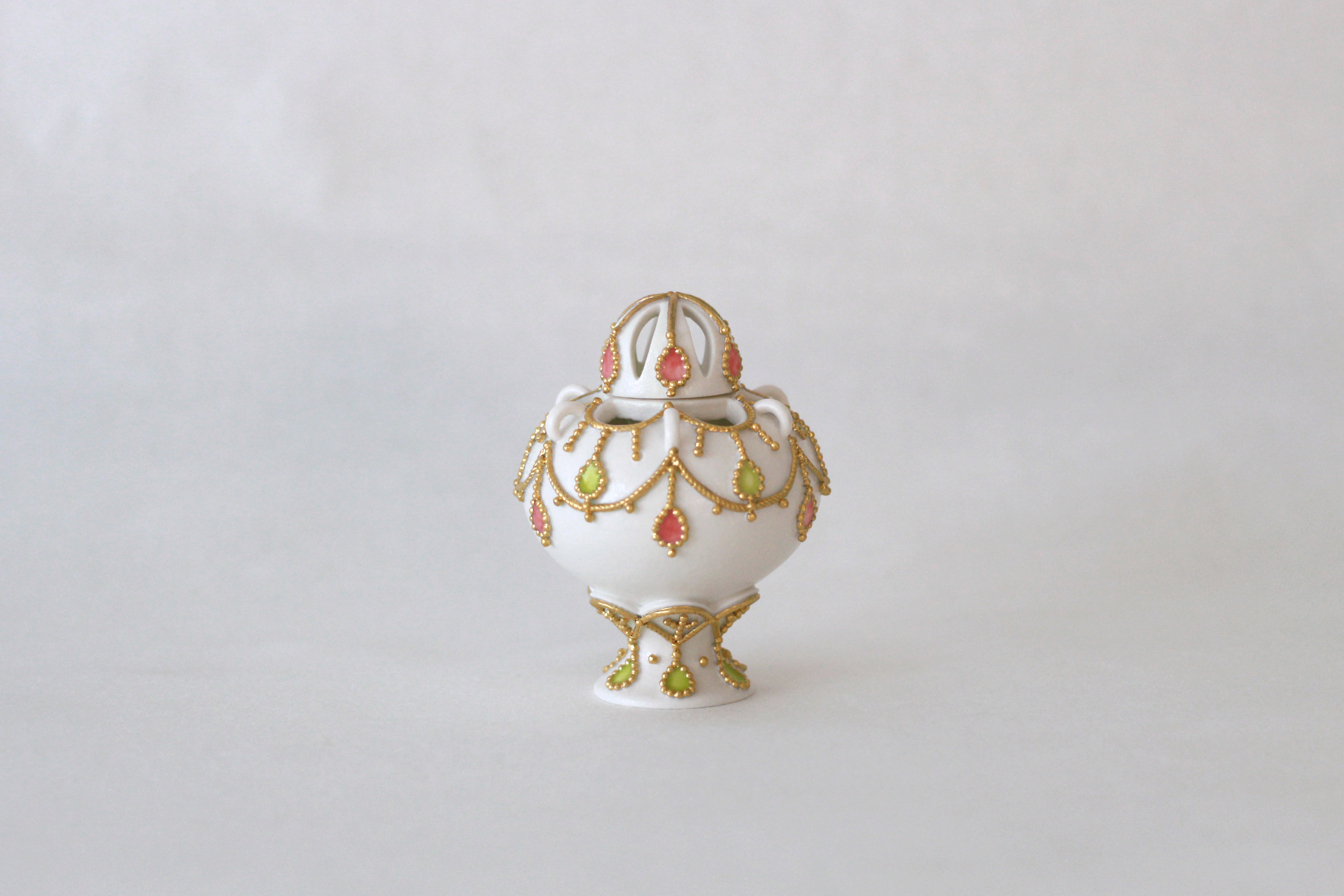
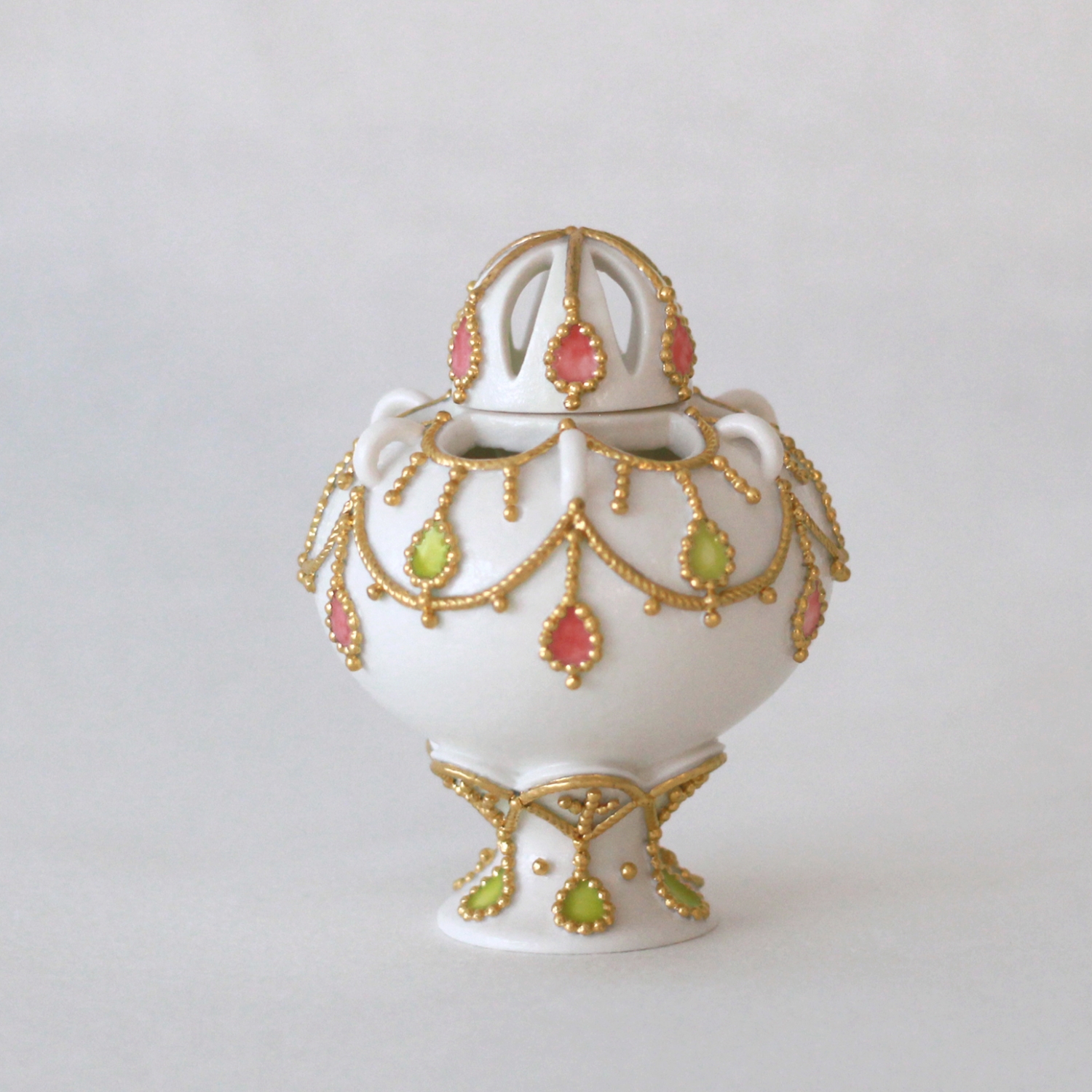
The openwork that extends from the lid through the body to the foot of the censer reveals its functional purpose while also serving as a decorative element in harmony with the gold embellishments arranged across the surface. The gold ornamentation, in particular, reinterprets the ancient metalworking technique of granulation, transforming it into a ceramic expression that carries both the beauty of antiquity and a contemporary sensibility.
The censer showcases different charms depending on its configuration—whether the body is attached to the foot or separated from it, and whether viewed from the front or from above. Each perspective reveals a distinct character. Though multiple forms and decorative elements coexist within a single piece, the evenly distributed openwork and gold detailing create an organic, cohesive harmony throughout.
Much like a chandelier adorned with gold grains and delicate gold lines, the gold decoration encircling the voluminous small vessel is rendered with a sense of gravity, as if gently cascading downward—enhancing the dimensionality and sculptural presence of the work.
Production Year: 2025
Production Technique: Slip casting
Materials : White porcelain clay
Glaze/Finish : Matte glaze, 16% German gold luster
Techniques : Slip casting
Firing : Bisque firing followed by overglaze firing
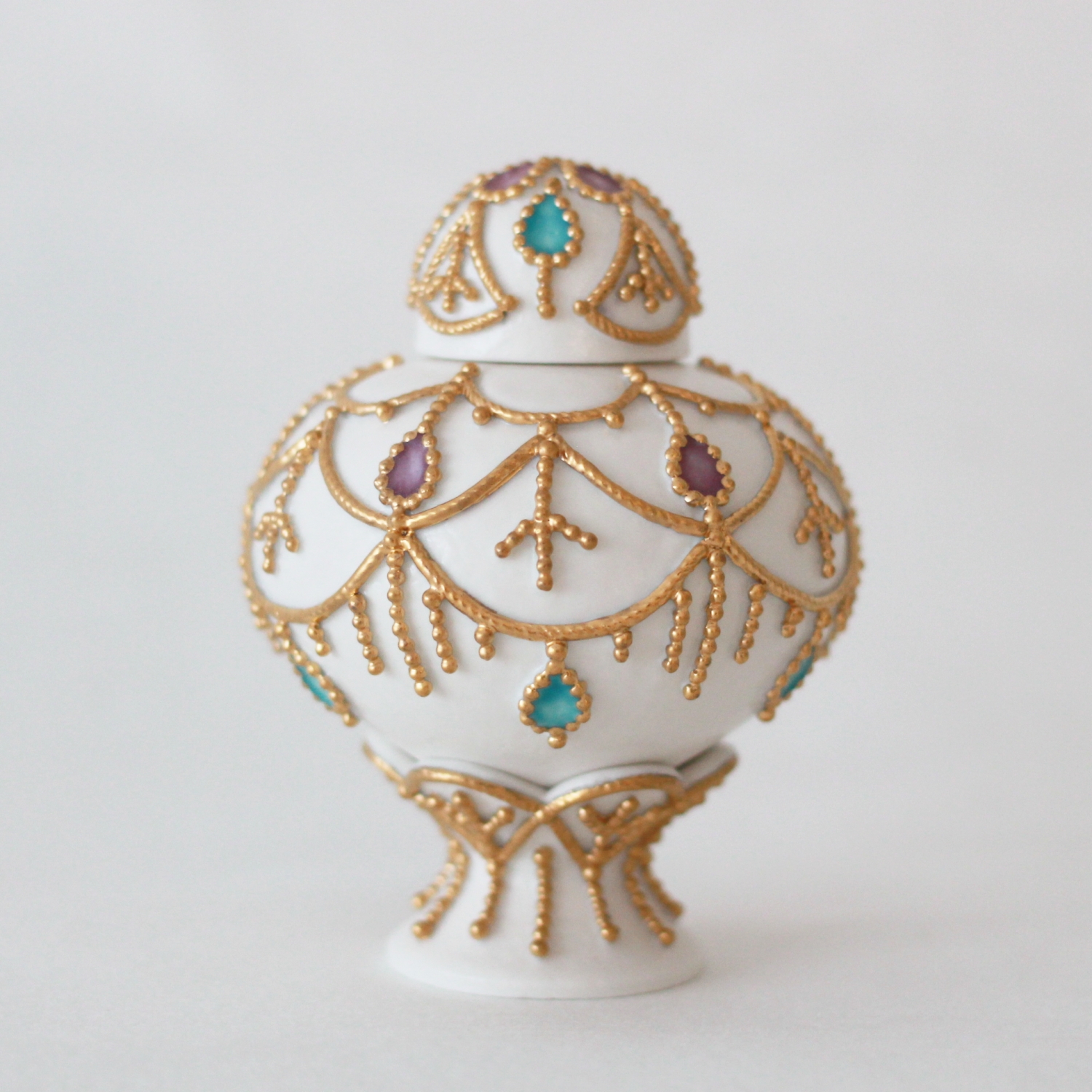
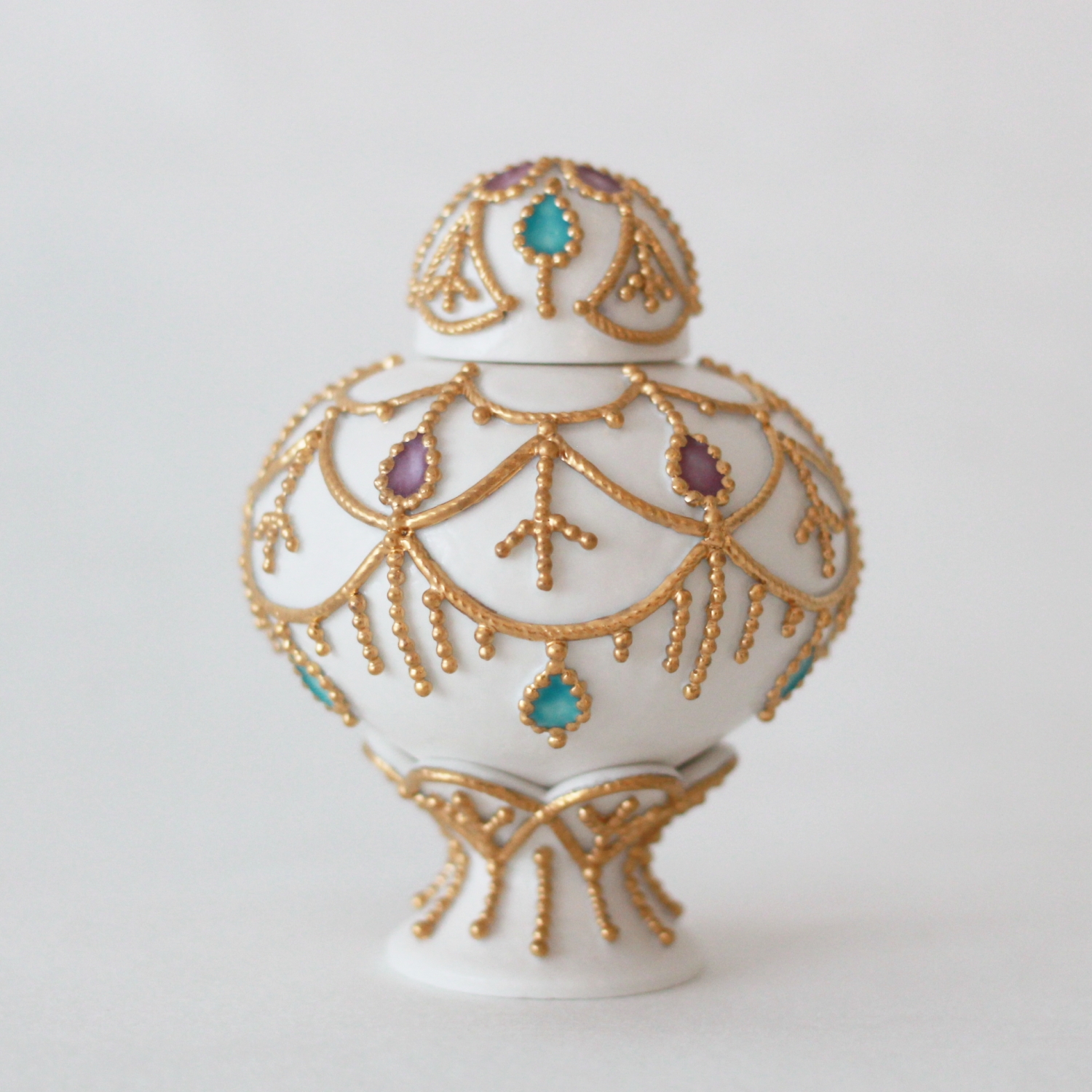
The openwork that extends from the lid through the body to the foot of the censer reveals its functional purpose while also serving as a decorative element in harmony with the gold embellishments arranged across the surface. The gold ornamentation, in particular, reinterprets the ancient metalworking technique of granulation, transforming it into a ceramic expression that carries both the beauty of antiquity and a contemporary sensibility.
The censer showcases different charms depending on its configuration—whether the body is attached to the foot or separated from it, and whether viewed from the front or from above. Each perspective reveals a distinct character. Though multiple forms and decorative elements coexist within a single piece, the evenly distributed openwork and gold detailing create an organic, cohesive harmony throughout.
Much like a chandelier adorned with gold grains and delicate gold lines, the gold decoration encircling the voluminous small vessel is rendered with a sense of gravity, as if gently cascading downward—enhancing the dimensionality and sculptural presence of the work.
Production Year: 2025
Production Technique: Slip casting
Materials : White porcelain clay
Glaze/Finish : Matte glaze, 16% German gold luster
Techniques : Slip casting
Firing : Bisque firing followed by overglaze firing
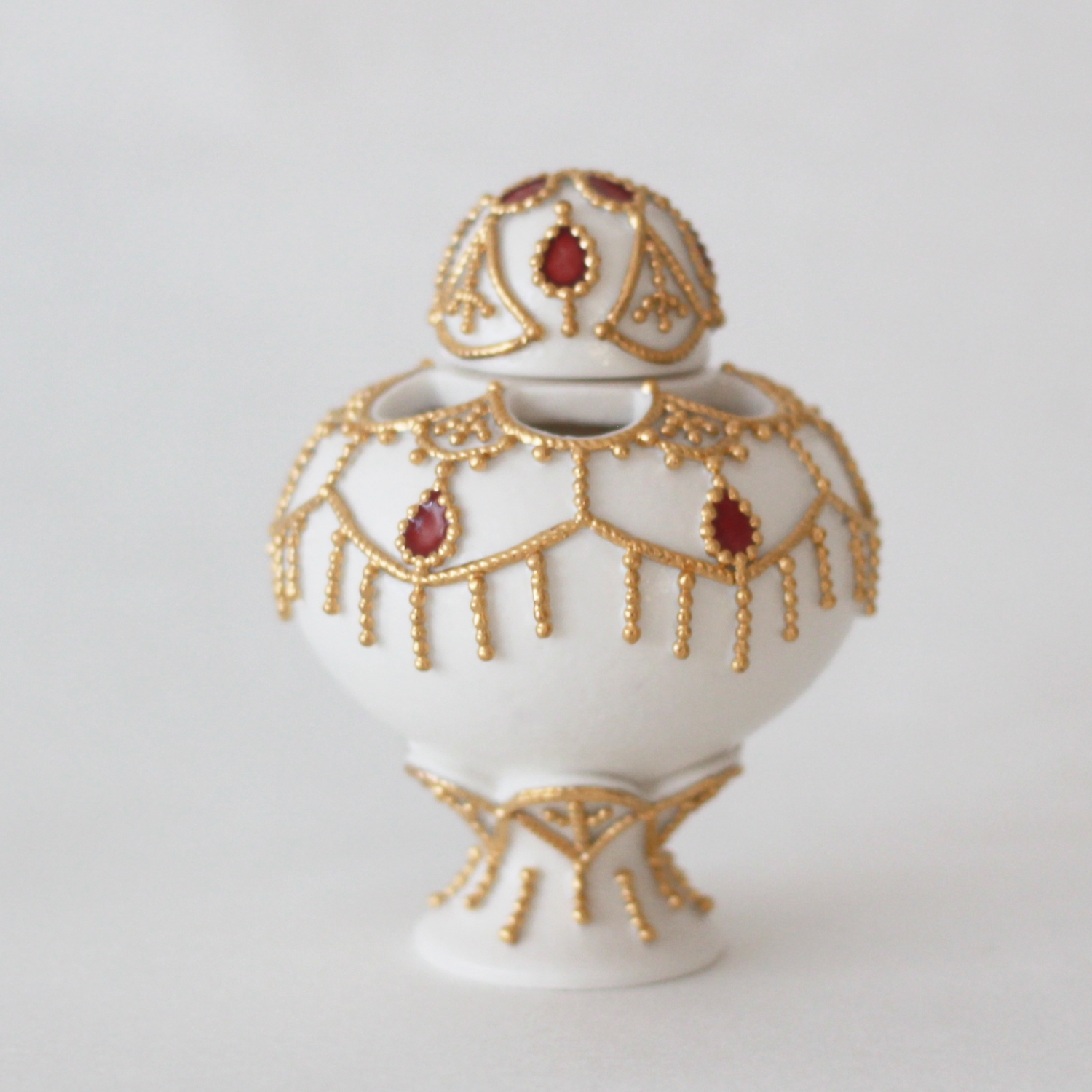
The openwork that extends from the lid through the body to the foot of the censer reveals its functional purpose while also serving as a decorative element in harmony with the gold embellishments arranged across the surface. The gold ornamentation, in particular, reinterprets the ancient metalworking technique of granulation, transforming it into a ceramic expression that carries both the beauty of antiquity and a contemporary sensibility.
The censer showcases different charms depending on its configuration—whether the body is attached to the foot or separated from it, and whether viewed from the front or from above. Each perspective reveals a distinct character. Though multiple forms and decorative elements coexist within a single piece, the evenly distributed openwork and gold detailing create an organic, cohesive harmony throughout.
Much like a chandelier adorned with gold grains and delicate gold lines, the gold decoration encircling the voluminous small vessel is rendered with a sense of gravity, as if gently cascading downward—enhancing the dimensionality and sculptural presence of the work.
Production Year: 2025
Production Technique: Slip casting