Go:objet is a portmanteau of the Korean character 古 (Go), meaning 'ancient' or 'traditional,' and the French word objet, meaning 'object' or 'thing.'
Our brand is founded on the belief that traditional Korean furniture is not merely a relic of the past, but can function as a single artistic objet holding formative value within contemporary life.
Go:objet deeply explores the aesthetic elements of Korea—such as traditional joinery, proportions, and color palettes—and reinterprets them to fit modern spaces and lifestyles. We create a unique connection between the past and the present. Go:objet is your own 'ancient objet,' designed to enrich your daily life with depth and beauty.
Presidential Award, Korea Craft Competition, Republic of Korea (2025)
Grand Prize, Royal Craft Exhibition, Republic of Korea (2025)
Grand Prize, Jeonju Traditional Craft National Competition, Republic of Korea (2025)
Chairperson’s Award, Korea Traditional Craft Competition, Republic of Korea (2024)
Commissioner’s Award, Cultural Heritage Administration of Korea (2024)
Chairperson’s Award, Korea Craft & Design Foundation (KCDF), Republic of Korea (2025)
Gold Prize & Special Prize, Jeonju Traditional Craft National Competition (2023, 2024)
Encouragement Prize, Namwon Lacquer Craft Competition (2025)
Special Selection & Encouragement Prize, Mudeung Art Exhibition (2023, 2024)
Maison & Objet, Kmoment Showcase, Paris, France (2026)
K-Heritage Art Show, Seoul, Republic of Korea
Solo Exhibition – Gobjet (古;objet), Republic of Korea (2025)
Presidential Award Winners Exhibition, Korea Craft Competition, Republic of Korea (2025)
Jeonju Traditional Craft Exhibition, Jeonju, Republic of Korea
Group Exhibition of Traditional Wood Furniture, Republic of Korea
Wood & Lacquerware
Craft
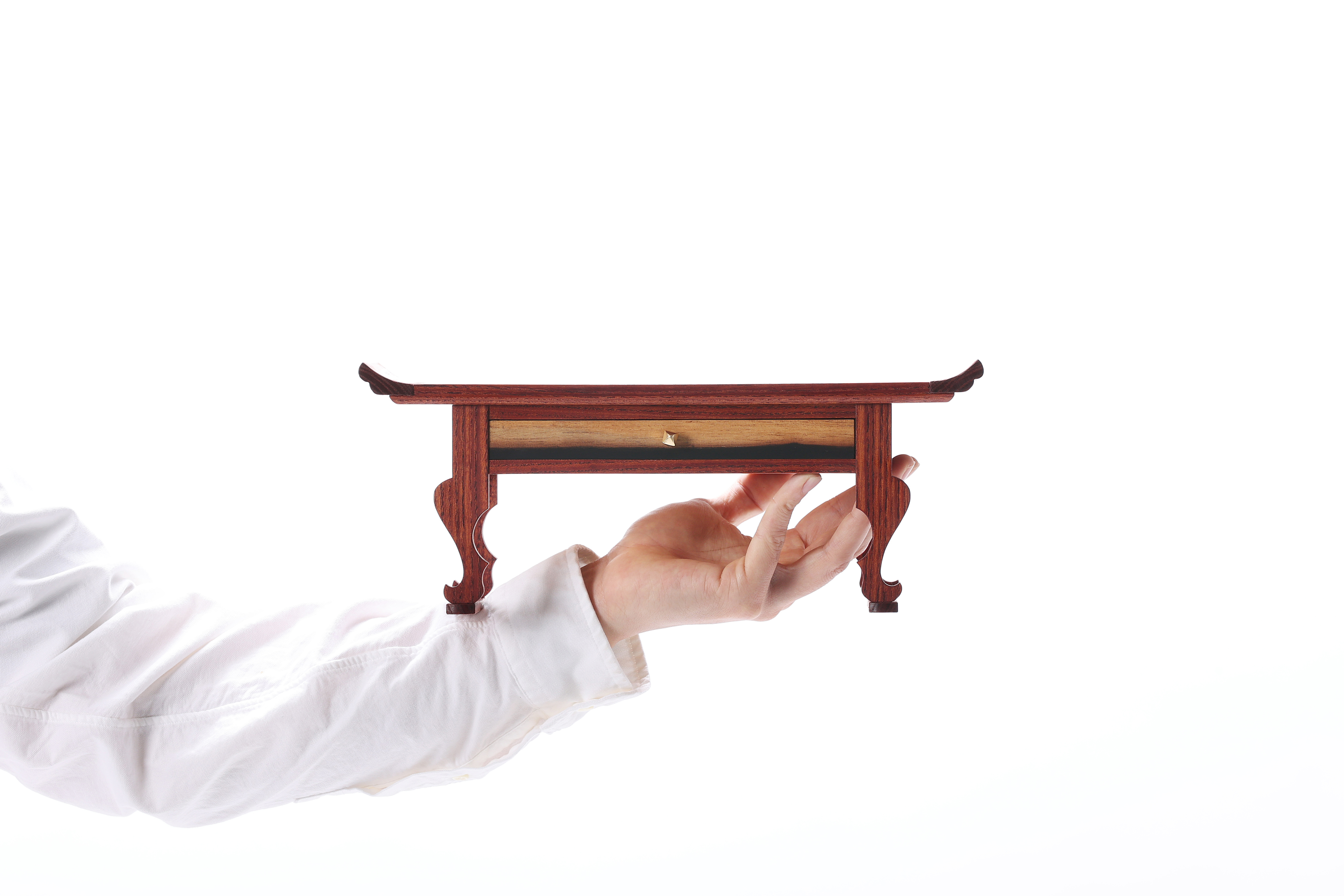

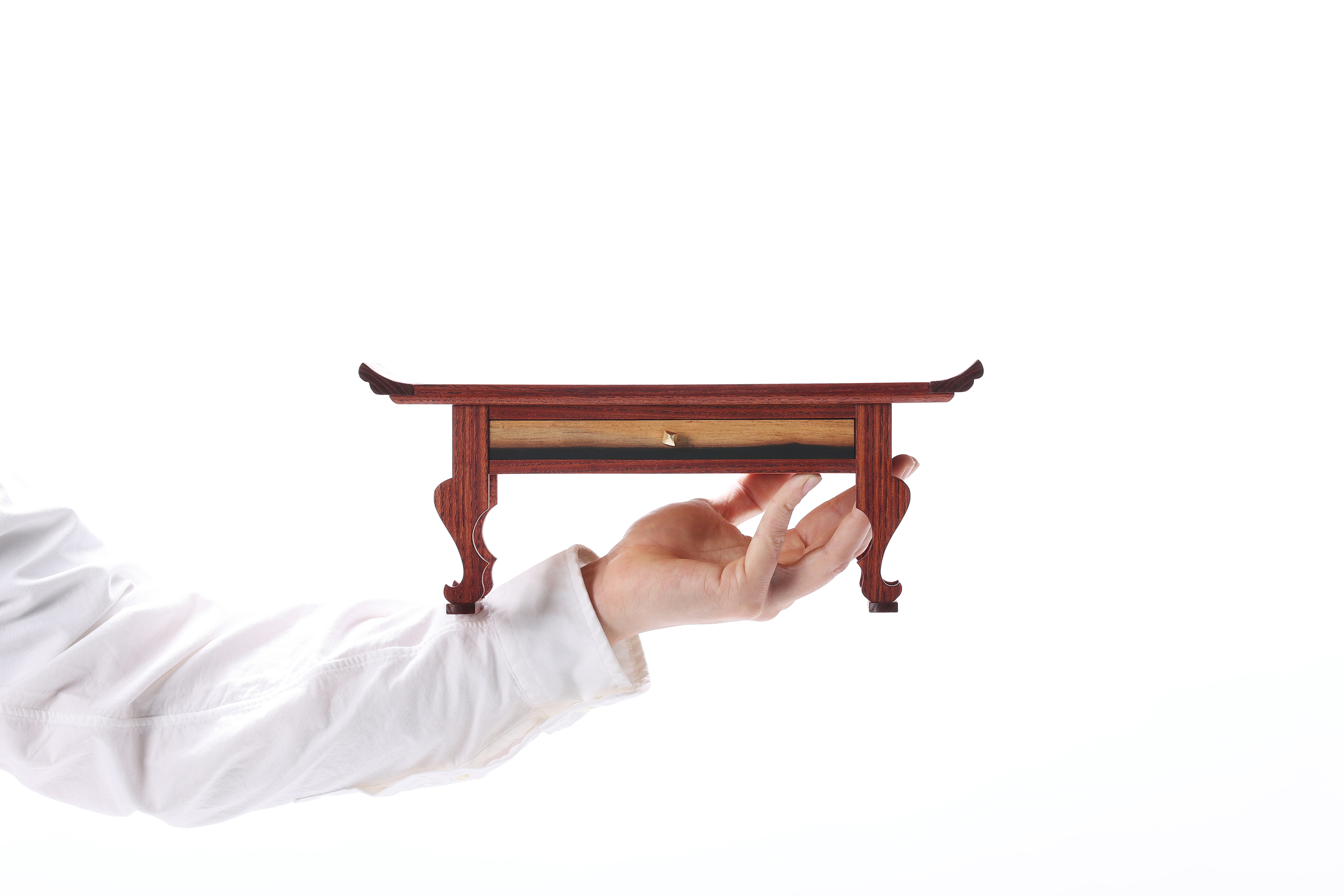
This piece is a miniature reinterpretation of gyeongsang, the traditional reading desk used by Korean scholars.
Crafted from red chamjuk wood and richly figured zelkova burl, it preserves the elegance of traditional Korean aesthetics.
With its refined curves and meticulously detailed drawers, the work stands as a highly collectible piece of functional art.
Production Year: 2025
Production Technique: Traditional Wood Joinery
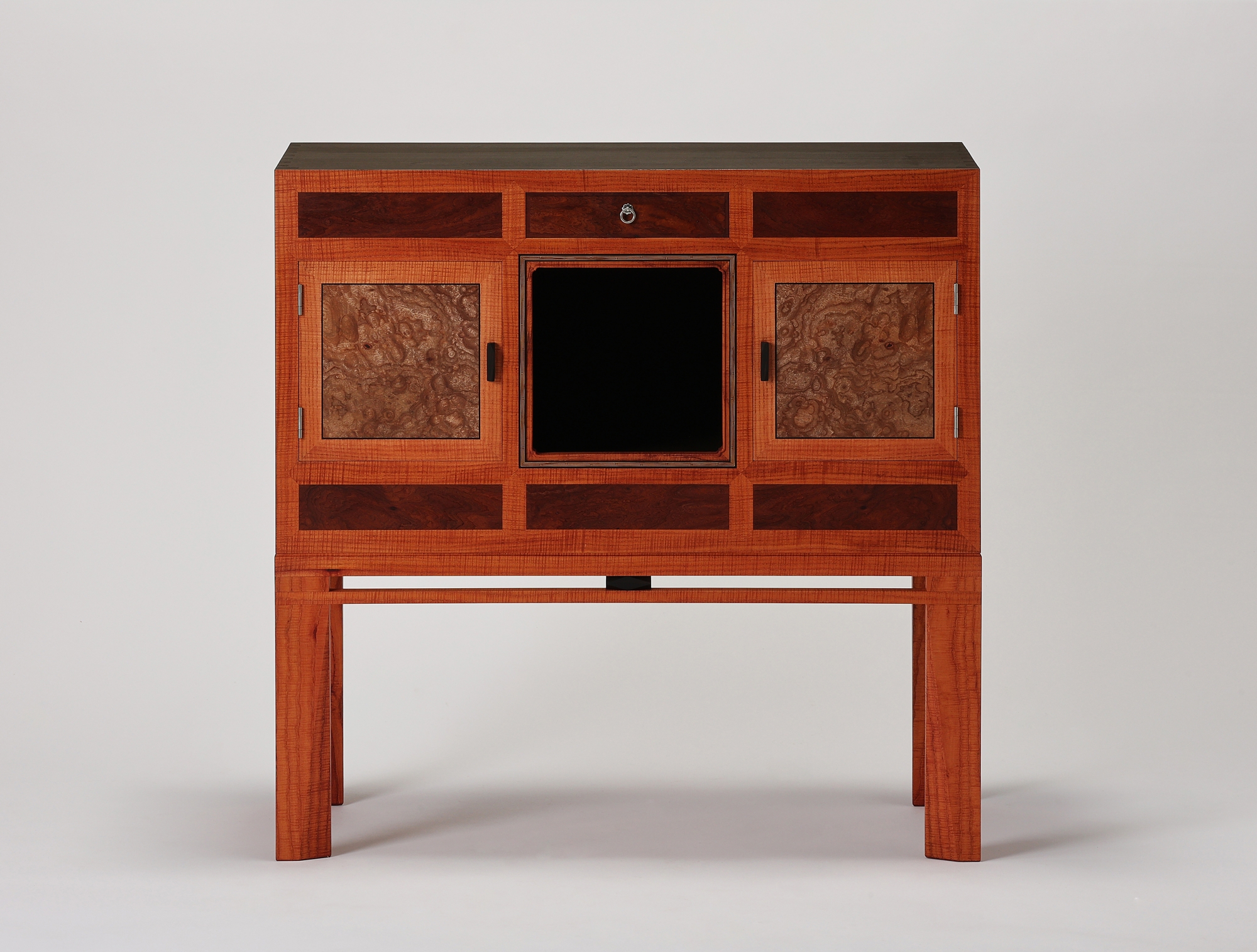
This cabinet is conceived not merely as a piece of furniture, but as a quiet stage for contemplation.
Rooted in traditional Korean woodworking techniques, the structure is entirely assembled through joinery, without the use of nails or screws, allowing the natural character of the wood to remain central.
The composition is defined by balance and restraint.
A symmetrical façade frames a central open compartment, intentionally left void to host a single object. This space transforms the cabinet into a vessel—one that holds not only objects, but moments of stillness and reflection.
Carefully selected woods reveal contrasting grains and tones, emphasizing the dialogue between structure and surface. The elevated legs lighten the overall mass, giving the piece a sense of calm suspension rather than weight.
By reinterpreting traditional furniture forms through a contemporary lens, this work seeks to bridge past and present—where function meets contemplation, and furniture becomes an object of quiet presence in modern life.
Production Year: 2025
Production Technique: Traditional Wood Joinery
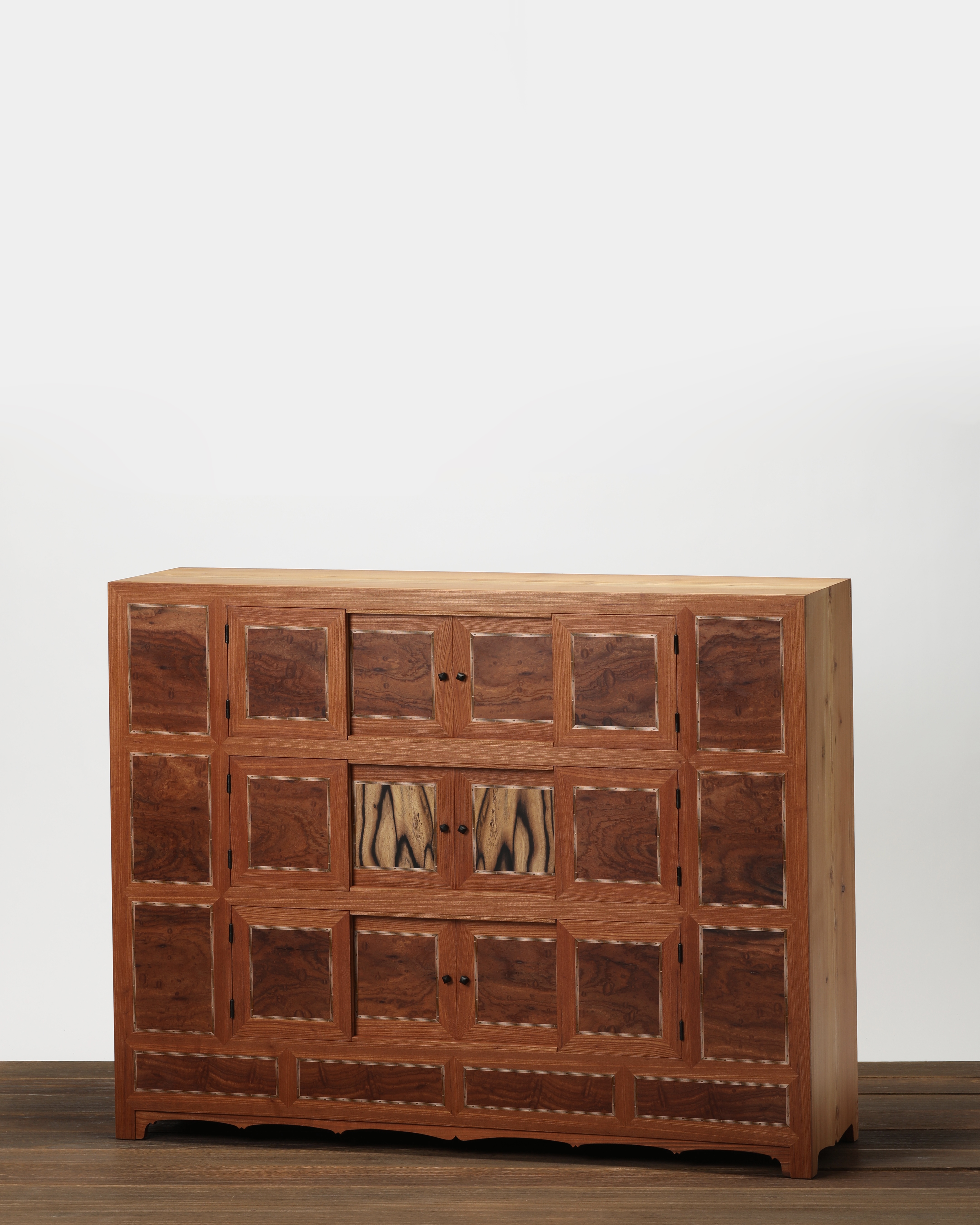
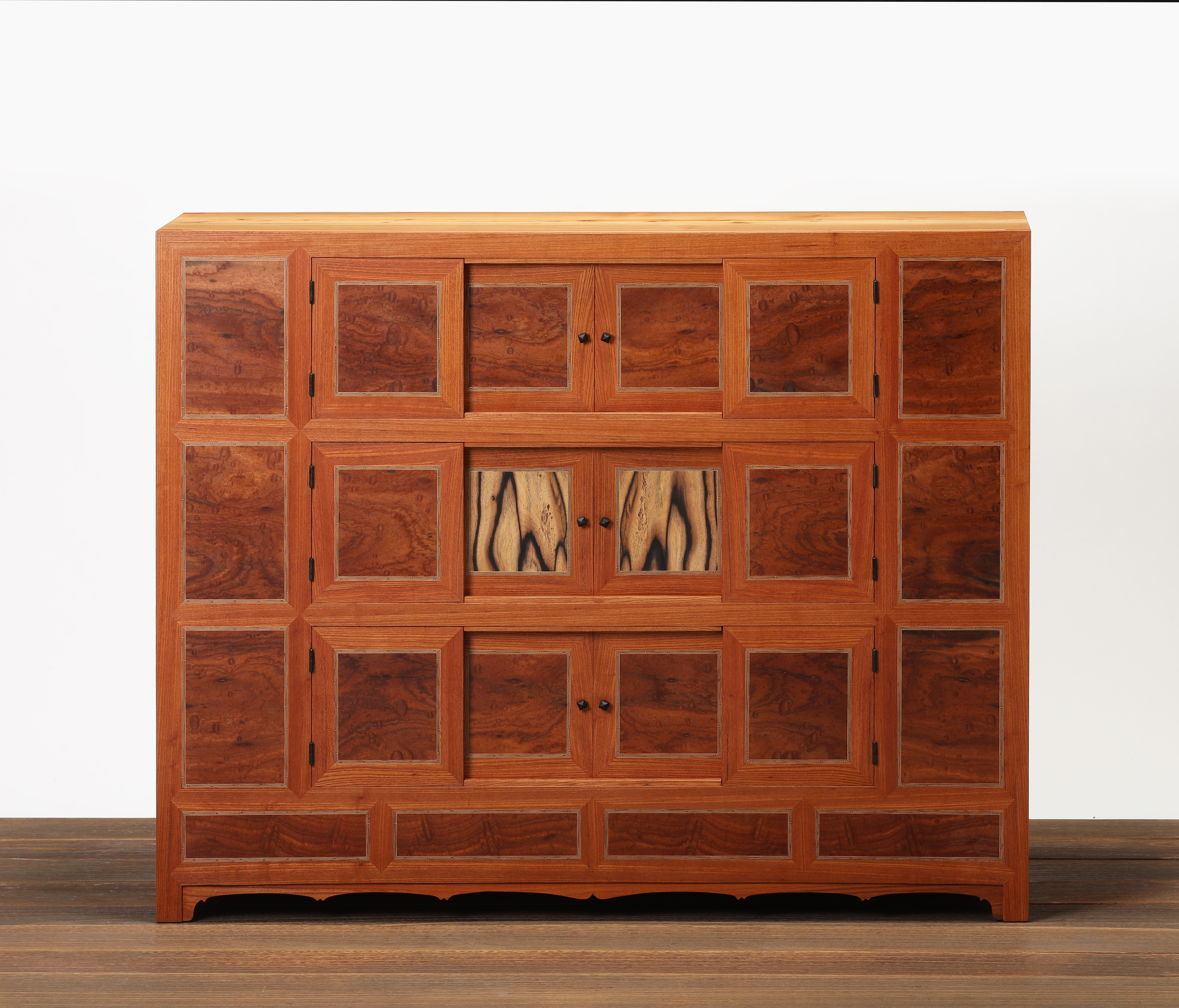
This work, the Angoji Three-Tier Cabinet, is a contemporary reinterpretation of the traditional Korean three-tier storage cabinet.
The term “Angoji” refers to a distinctive door construction in which one door is nested into another, allowing part of the door frame to open together. The two doors appear to embrace one another, embodying both structural ingenuity and symbolic harmony.
The overall form of the cabinet is designed to maximize functionality for organizing and storing objects, while maintaining a balanced and composed presence within a modern interior.
The primary materials are zelkova wood and zelkova burl, chosen for their refined grain and depth. At the center, black persimmon wood is introduced as a bold visual accent, creating a strong contrast that draws the eye. The main body of the cabinet is constructed from reclaimed larch wood, carrying the traces of time and adding both structural strength and a sense of natural elegance.
Traditional cast-iron hardware is used for the handles and hinges, lending the piece a dignified yet understated presence that balances refinement with a sense of heritage. Subtle curves are incorporated into the lower section of the cabinet, softening the overall silhouette and giving the piece a harmonious blend of solidity and gentleness.
This work goes beyond the role of simple storage furniture. It is conceived as an object that brings the aesthetic values of traditional Korean wooden furniture into contemporary living spaces, allowing tradition and modern life to coexist naturally.
Production Year: 2025
Production Technique: Traditional Wood Joinery
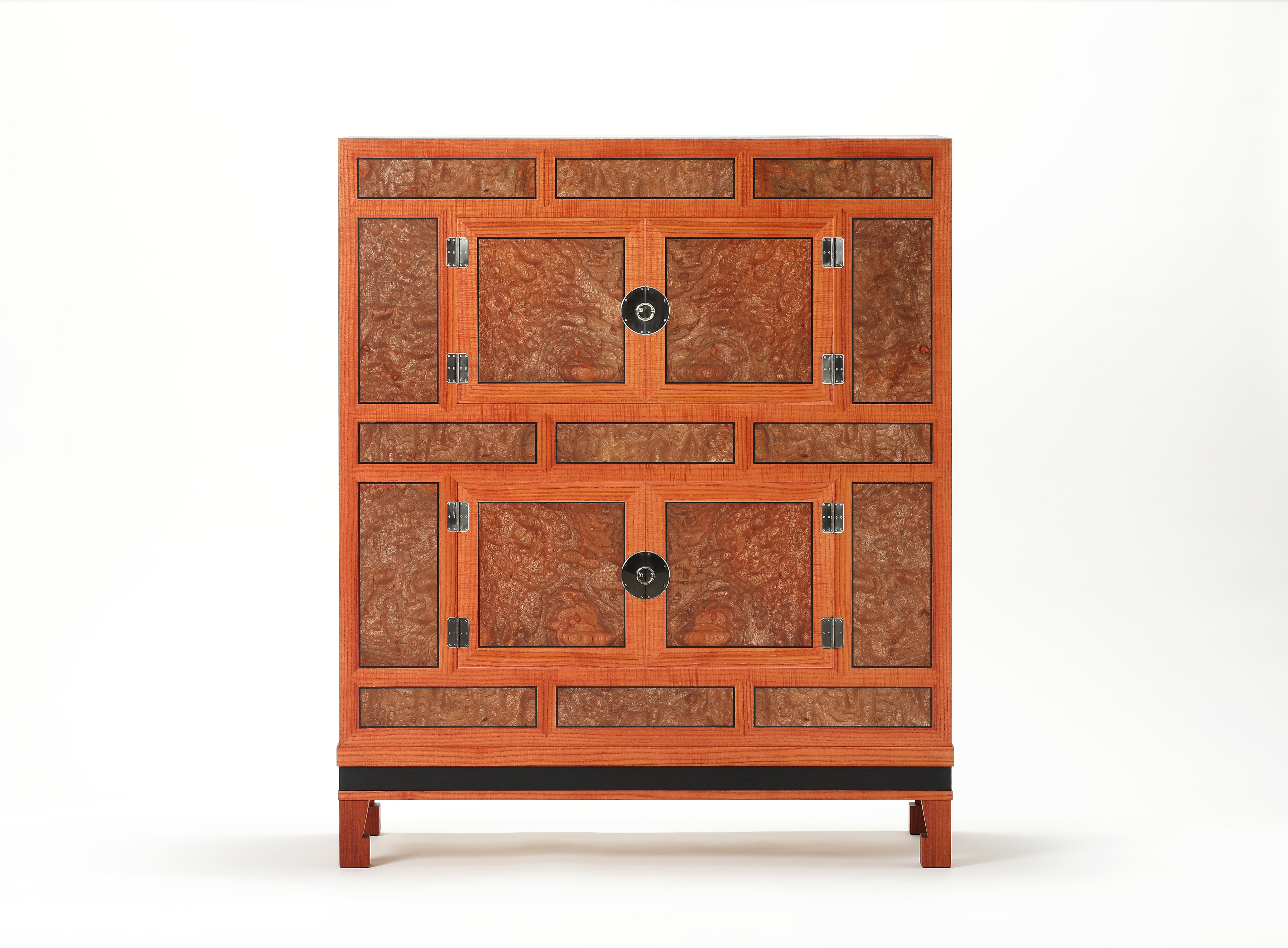
This work, the Mungap Cabinet, is a contemporary reinterpretation of the traditional Korean mungap, a low storage cabinet historically used in scholars’ quarters. The structural frame is crafted from Japanese cedar (Toona sinensis), ensuring stability and durability, while zelkova burl veneer is applied to the panels, creating a refined surface with rich depth and texture. The interior body is constructed from paulownia wood, chosen for its light weight and excellent durability.
The upper section features an Angoji sashul door system, a distinctive opening method that combines sliding and hinged mechanisms within a single structure. This design allows for flexible access while providing additional interior storage, enhancing the cabinet’s practicality.
The lower section follows the traditional structure of a mungap cabinet, adopting a thick lift-up door (dugeopdari-style) that opens by lifting the door upward. This unique opening mechanism reflects an ingenious feature of traditional Korean furniture, reinterpreted here in a balanced and contemporary manner.
More than a simple storage cabinet, the Mungap Cabinet embodies both the refined craftsmanship and functional wisdom of traditional Korean wooden furniture. Designed to harmonize with modern interiors, this piece stands as an artistic object that adds depth, restraint, and quiet dignity to any space.
Production Year: 2025
Production Technique: Traditional Wood Joinery
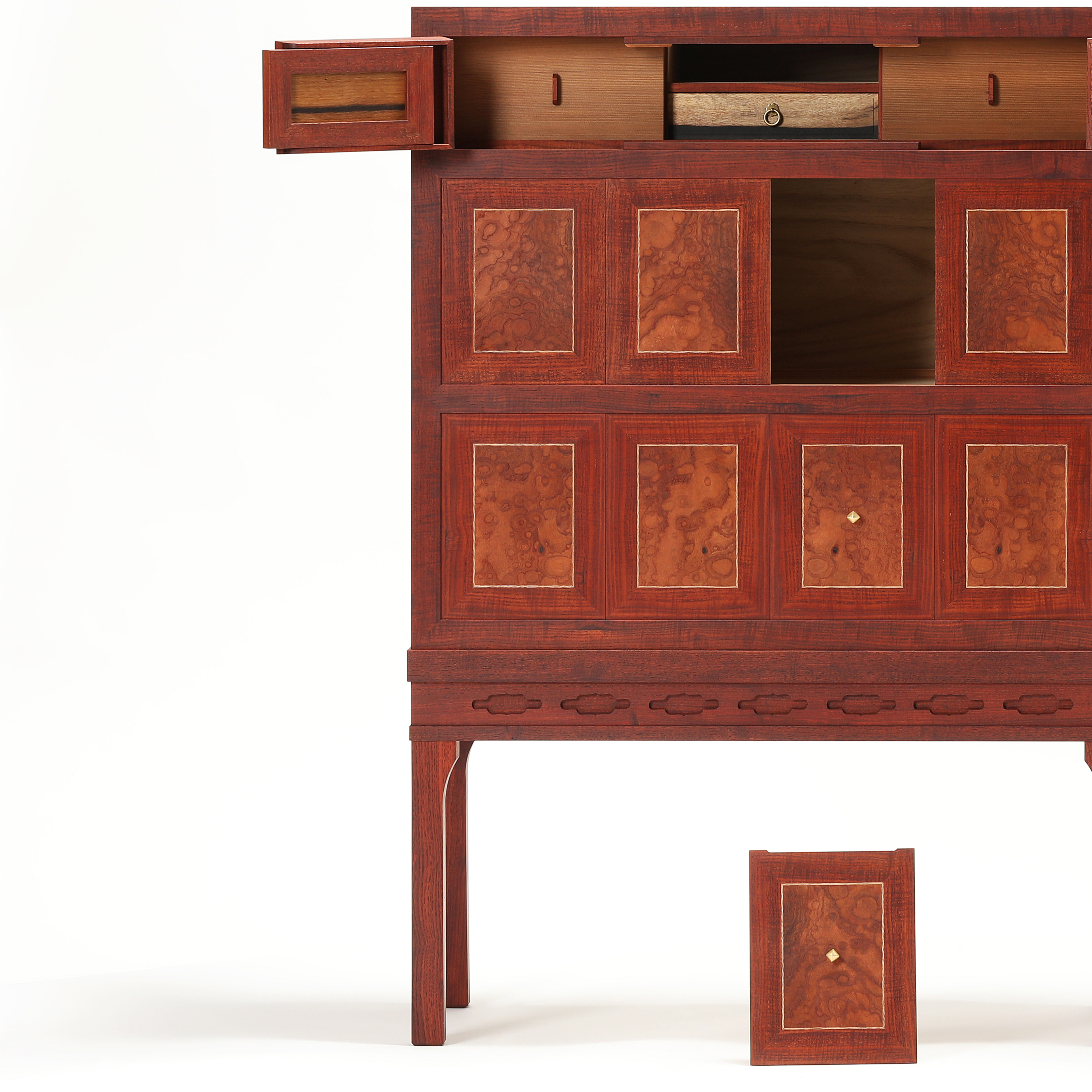
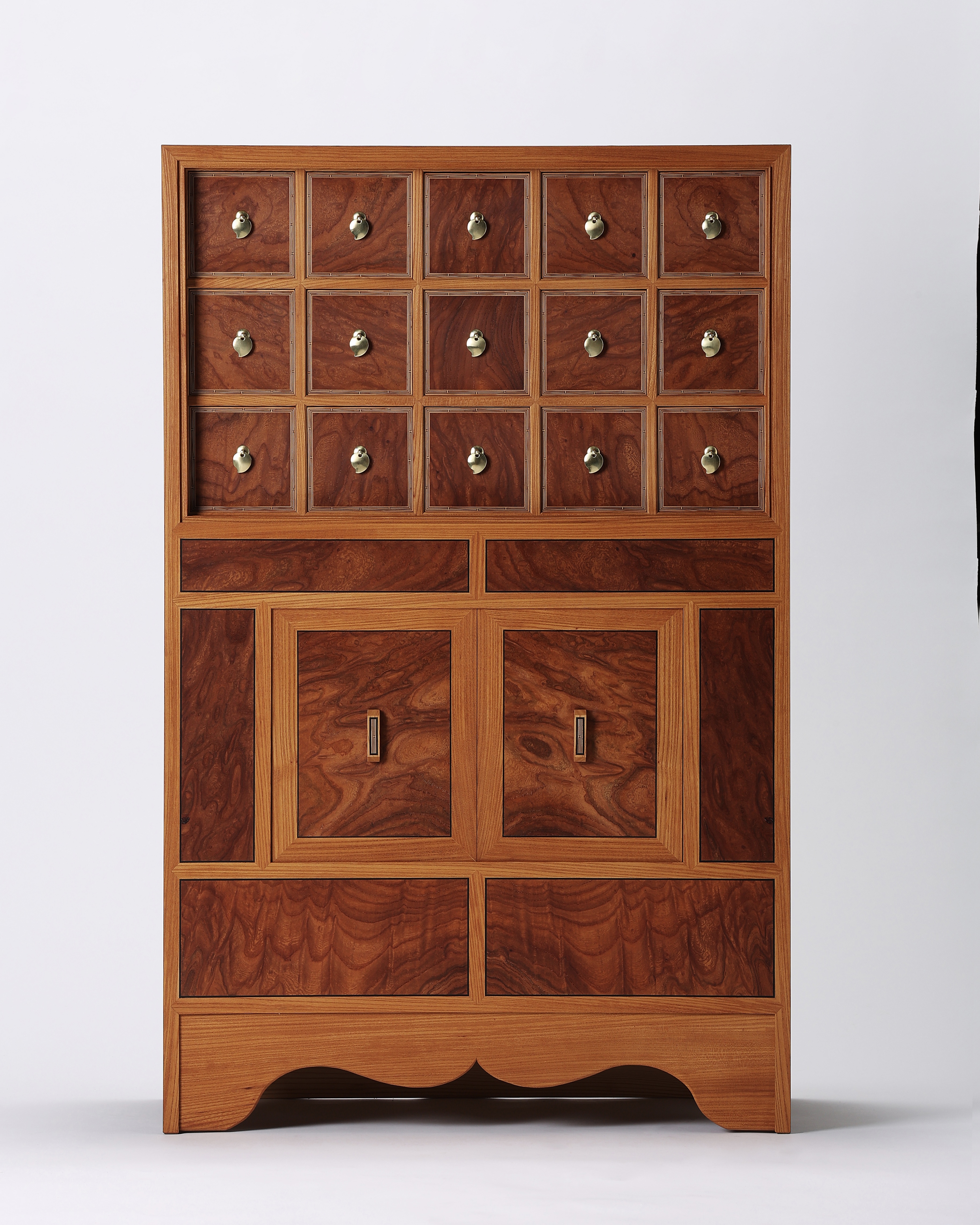
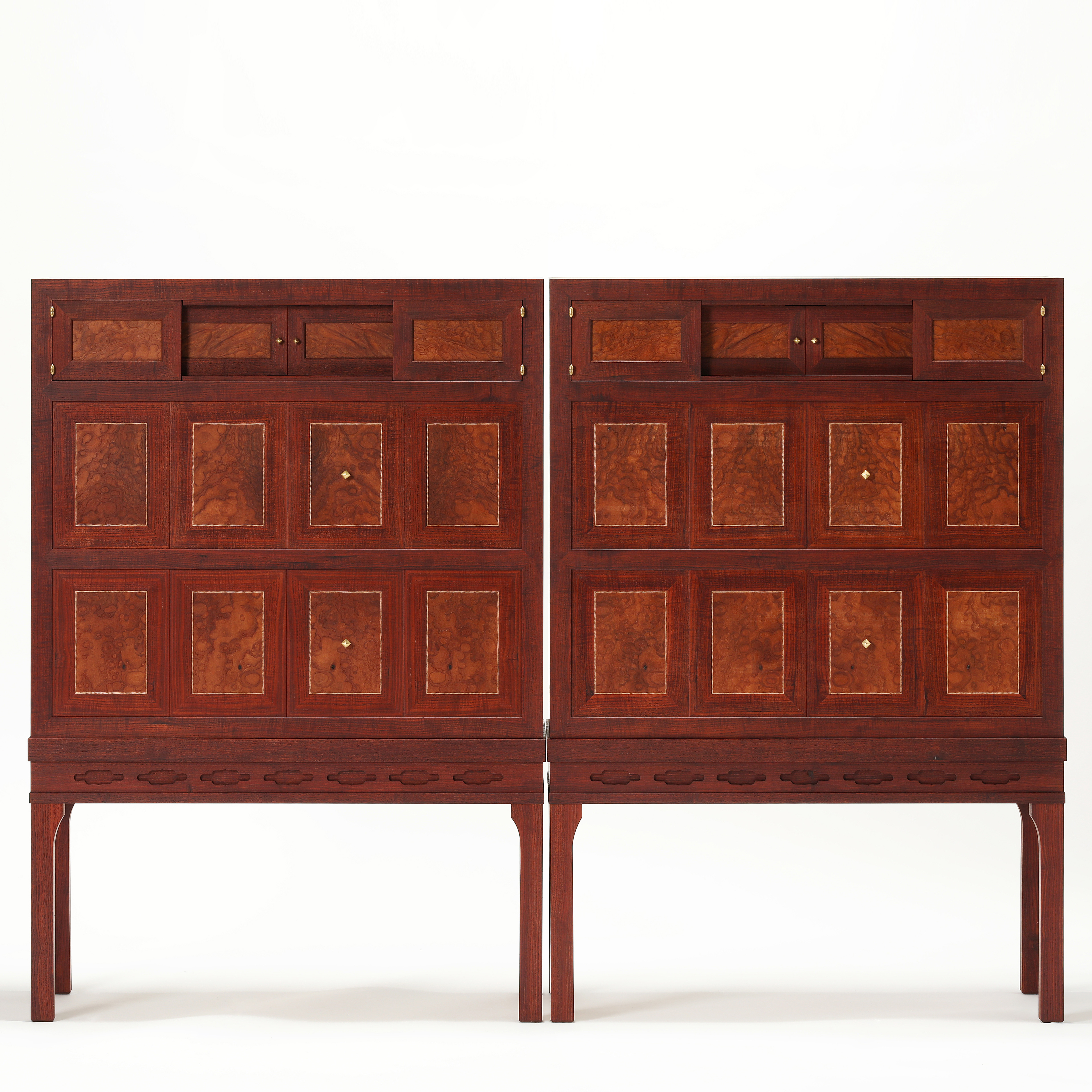
This work, the Medicine Cabinet (Yakjang), is a contemporary reinterpretation of the traditional Korean yakjang, a cabinet historically used for storing medicinal herbs. Zelkova wood and zelkova burl are harmoniously combined to create a warm yet refined atmosphere, while the interior is crafted from paulownia wood, enhancing practicality through its light weight and durability.
The upper section features multiple small drawers designed to store various herbs or personal objects. Brass handles are applied as a structural and visual element, reinforcing durability while preserving the traditional aesthetic of Korean wooden furniture.
The lower doors adopt the traditional thick lift-up door (dugeopdari-style) opening method, allowing for smooth and stable operation. Softly curved ventilation openings at the base contribute to the cabinet’s overall sense of balance and composure.
Going beyond its original functional role, this Yakjang is conceived as an object that elevates the surrounding space, embodying both the practical wisdom and refined beauty of traditional Korean furniture within a contemporary context.
Production Year: 2025
Production Technique: Traditional Wood Joinery
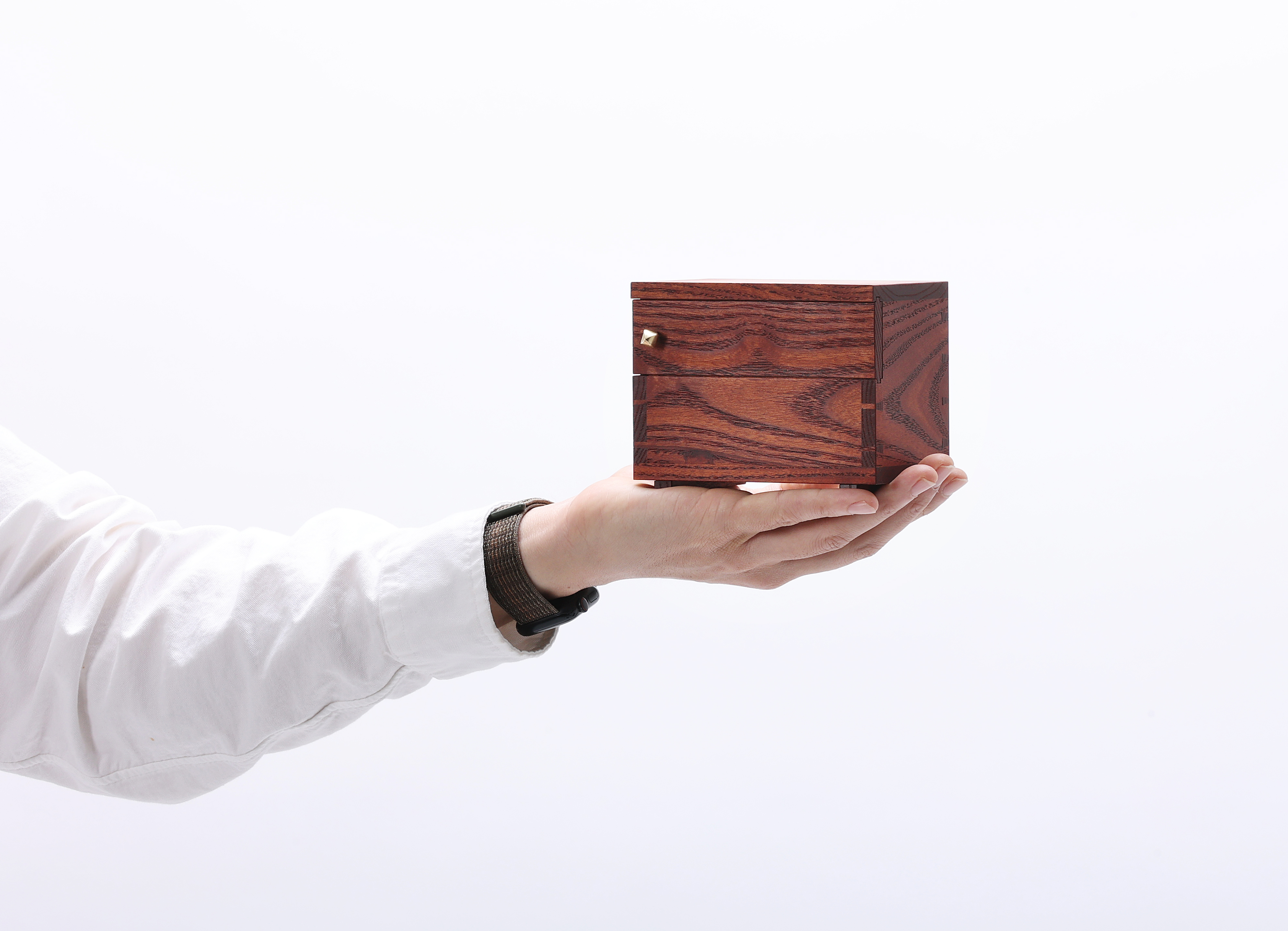
A miniature chest reinterpreting the proportional beauty of the traditional Bandaegi, highlighting the stunning grain of the reddish wood. Precise joinery and a brass knob add simple elegance.
Production Year: 2025
Production Technique: Traditional Wood Joinery
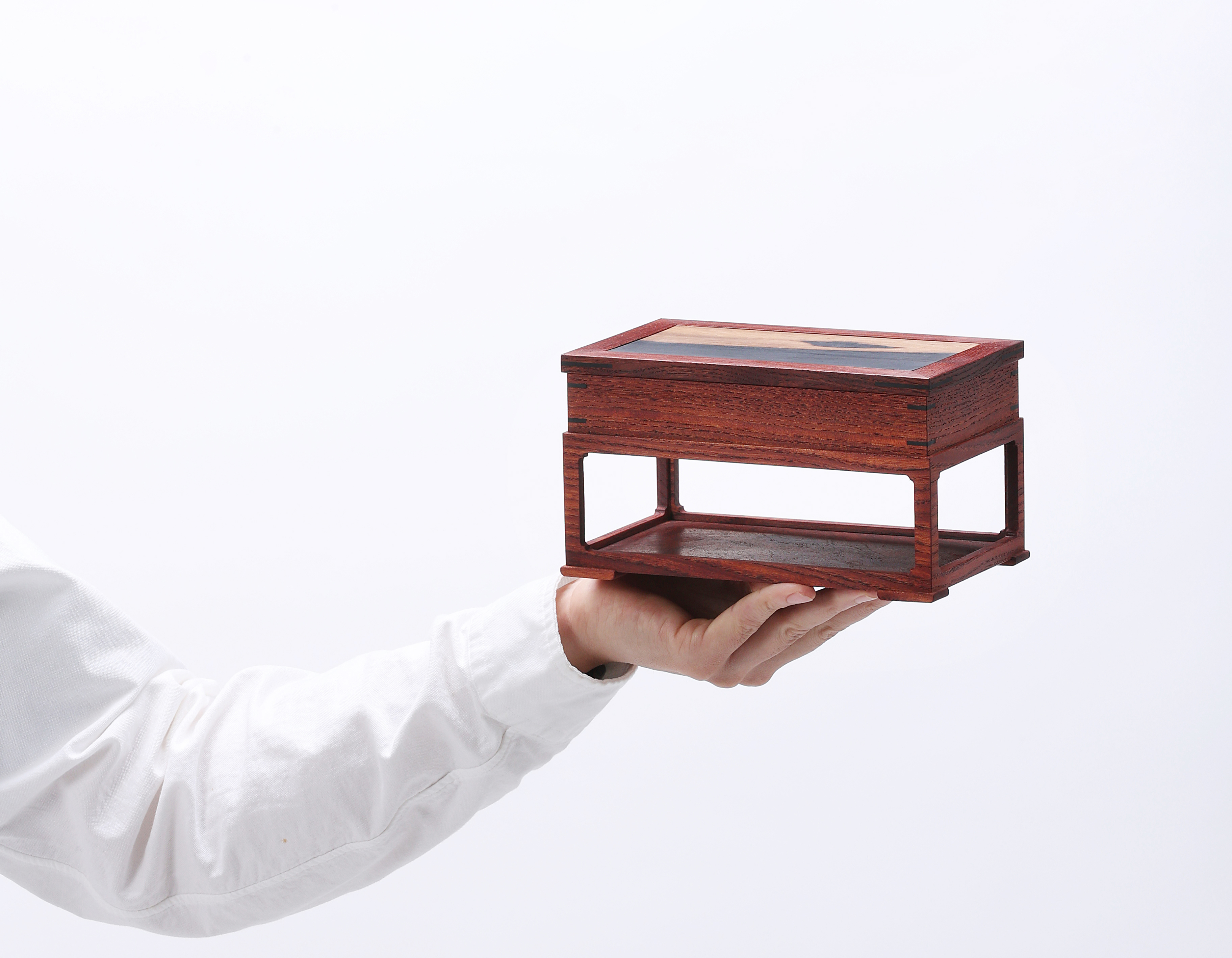
A miniature inkstone table crafted from red wood. This traditional woodcraft piece features a neat structure and a harmonious color contrast on its lid.
Production Year: 2025
Production Technique: Traditional Wood Joinery